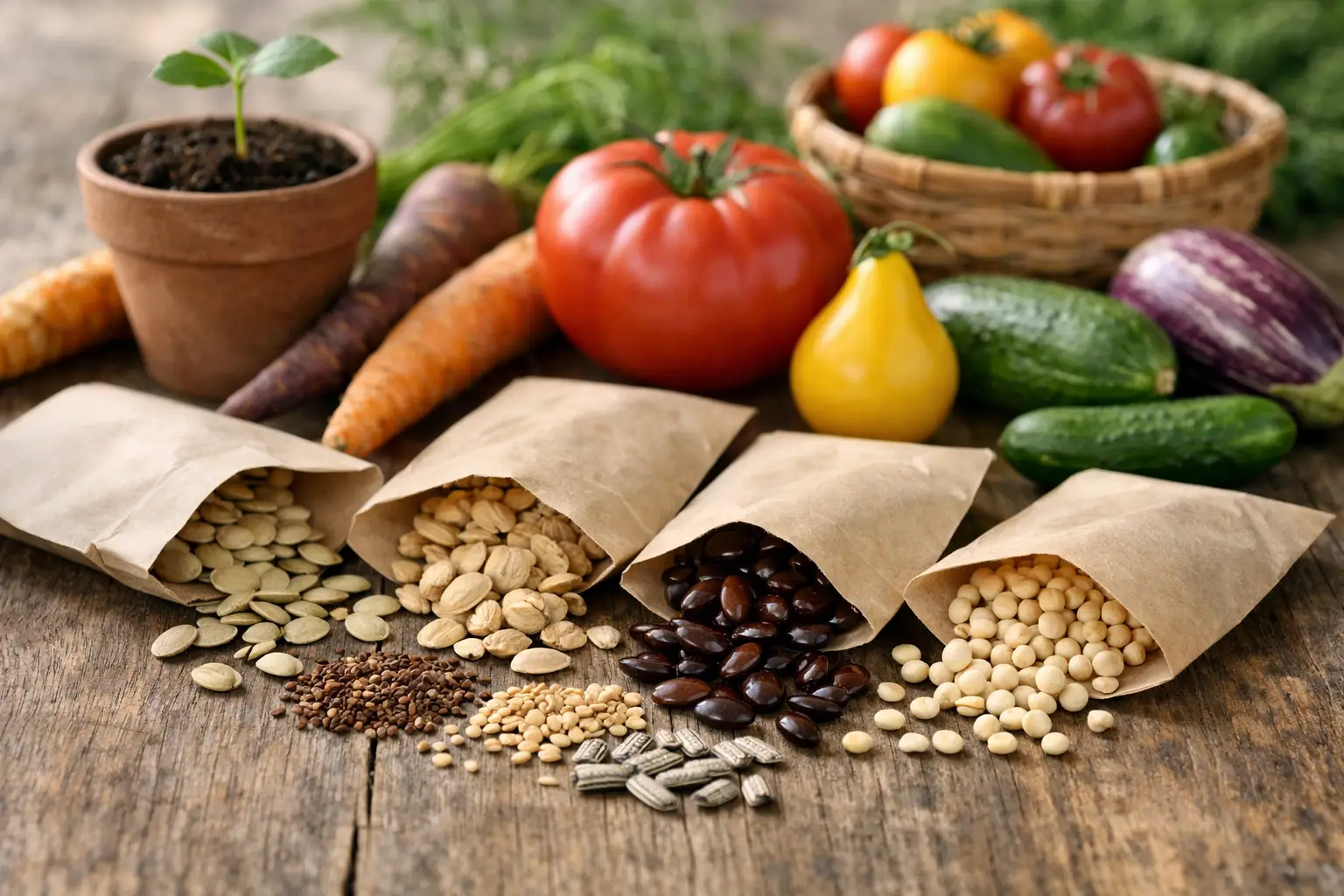
A packet labeled non-GMO heirloom vegetable seeds offers more than just the promise of fresh vegetables. It gives you the opportunity to grow tomatoes with incredible flavor, beans you can save seed from year after year, and varieties with stories that have been passed from gardener to gardener for generations.
But the label is only the beginning.
The best gardens come from choosing varieties that fit your climate, your available space, and the foods you actually enjoy eating. That’s one reason we believe affordable seed matters. When trying something new doesn’t cost much, you’re free to experiment, discover new favorites, and become a better gardener with every season.
If you’re planting your first garden, heirloom vegetables are an excellent place to start. They offer tremendous variety, are often easy to grow, and let you experience flavors and colors that rarely make it to grocery store shelves. A small raised bed can easily hold a dependable cherry tomato, a crisp lettuce, a productive bush bean, and one unusual variety you’ve always wanted to try.
What Non-GMO Heirloom Vegetable Seeds Mean
The phrase combines two related—but very different—ideas.
Non-GMO means the seed was not produced using genetic engineering. Nearly all vegetable seed sold to home gardeners is already non-GMO, so while the label provides reassurance, it doesn’t tell you whether a variety will taste better, produce more, or resist disease. Those qualities depend on the variety itself and how well it matches your growing conditions.
Heirloom generally describes a variety that has been grown and passed down for many generations, often through families, communities, or regional gardening traditions. Although there is no single legal definition, heirloom varieties are usually open-pollinated, meaning they grow true to type when pollinated by the same variety.
That matters if you hope to save seed. Seed collected from an open-pollinated heirloom tomato should produce plants very similar to the parent. Weather, soil, and natural pollination can create small differences from year to year, but you’re building on a stable variety rather than starting over every season.
Heirloom, Hybrid, Organic, and GMO Are Not the Same
These gardening terms are often grouped together, which makes them easy to confuse. In reality, each describes something different.
A hybrid is created by carefully crossing two selected parent varieties through traditional pollination—not genetic engineering. Hybrids can be outstanding garden plants, offering earlier harvests, improved disease resistance, or more uniform fruit. The trade-off is that seed saved from a hybrid usually won’t produce plants identical to the parent the following year.
Organic refers to how the seed crop was grown under certified organic production standards. A seed can be organic and heirloom, organic and hybrid, or simply non-GMO. Likewise, untreated seed means it has not been coated with conventional fungicides or pesticides before sale. Each label answers a different question, and none automatically makes one seed “better” than another.
There’s no reason to think hybrids are bad or heirlooms are always the better choice. If a disease-resistant hybrid tomato gives you a dependable harvest where you live, that’s a great choice. If you’d like to save seed from a favorite bean or grow a tomato your grandparents may have known, an heirloom is hard to beat. Most gardens have room for both.
There is no reason to think hybrids are bad or heirlooms are always the better choice. If late blight is common where you live and a disease-resistant hybrid tomato gives you a dependable harvest, that’s a smart choice. If you’d like to save seed from a favorite bean or grow a tomato that’s been passed down for generations, an heirloom may be exactly what you’re looking for. Most gardens have room for both.
Why Gardeners Choose Heirloom Vegetables
Gardeners often choose heirloom vegetables for their outstanding flavor, unique colors, fascinating history, and the opportunity to grow varieties that rarely appear in grocery stores. Purple-podded peas, striped beets, lemon cucumbers, or richly flavored paste tomatoes make a garden feel personal rather than predictable.
Heirlooms also encourage you to become a better observer. Because many varieties were selected over generations in particular regions or for specific purposes, one may thrive in your hot, humid summers while another performs better in cooler conditions. That’s not a weakness—it’s an opportunity to learn what grows best in your own garden.
After a few seasons, you’ll begin to notice patterns. One lettuce may tolerate summer heat better than another. One pepper may ripen weeks earlier. One squash becomes a family favorite while another never gets planted again. Those observations are just as valuable as saving seeds because they help shape a garden that’s uniquely yours.
How to Choose Non-GMO Heirloom Vegetable Seeds
Start with your garden, not the prettiest catalog photo. Your last spring frost, first fall frost, available sunlight, growing space, and watering habits should guide every planting decision.
If you’re planting your first vegetable garden, resist the temptation to grow everything at once. A handful of reliable crops will teach you far more than twenty different varieties competing for your attention.
Leaf lettuce, radishes, bush beans, and herbs reward you with quick harvests that build confidence. Tomatoes, peppers, cucumbers, and squash require a little more patience but are often the vegetables gardeners look forward to most. A few successful crops are far more encouraging than an ambitious garden that’s difficult to manage.
Pay attention to days to maturity. It’s an estimate rather than a guarantee, and for some crops it’s measured from transplanting instead of direct seeding. Even so, it’s one of the best tools for choosing varieties that fit your growing season. If your frost-free season is short, a tomato that matures in 55 to 65 days from transplant is usually a safer choice than one requiring 90 days.
Plant size matters too. Indeterminate tomatoes continue growing throughout the season and need sturdy support. Bush beans stay compact and are ideal for smaller gardens. Vining squash can quickly spread across a bed unless trained outward or grown vertically. If you’re gardening in containers, choose compact varieties and use pots large enough to retain moisture during hot weather.
When you’re unsure which variety to grow, plant more than one. Every garden is different. One tomato may thrive while another struggles. One lettuce may handle summer heat better than another.
Affordable seed makes those experiments possible. Instead of wondering which variety is best, you can simply grow both and let your own garden answer the question. Some of the best discoveries happen by accident.
Planting for Better Germination
Even the highest-quality seed cannot overcome poor planting conditions. Most germination problems aren’t caused by bad seed—they’re caused by planting too early, planting too deeply, or allowing the soil to dry out before seedlings emerge.
Before planting, take a minute to read the seed packet. Seed depth, soil temperature, spacing, and moisture matter far more than many beginning gardeners realize.
Cool-season crops such as peas, spinach, lettuce, kale, and radishes tolerate cool soil and light frost. Plant them in early spring and, in many regions, again in late summer for a fall harvest. Warm-season crops such as beans, cucumbers, squash, corn, peppers, and tomatoes perform best once the soil has warmed. Waiting an extra week or two is often rewarded with faster germination and healthier seedlings.
A good rule of thumb is to plant seeds about two to three times as deep as the seed is wide. Tiny lettuce and carrot seeds need only a light covering of soil, while larger bean, pea, and squash seeds should be planted deeper. Gently firm the soil after planting so each seed has good contact with moisture, then water carefully.
Keep the soil consistently moist until seedlings emerge. After that, water more deeply but less frequently to encourage roots to grow downward. Don’t be afraid to thin crowded seedlings. It may feel wasteful, but a few properly spaced plants almost always outperform a crowded patch competing for light, water, and nutrients.
Saving Seeds From Heirloom Vegetables
Saving seed is completely optional, but it’s one of the most rewarding reasons to grow heirloom vegetables. If you’re just getting started, begin with beans, peas, lettuce, and tomatoes. These are mostly self-pollinating, making them excellent choices for beginners.
Save seed only from healthy, productive plants with the qualities you want to preserve. Allow bean and pea pods to dry completely on the plant until they’re brown and crisp. For tomatoes, scoop out the mature seeds and their surrounding gel, ferment them briefly, rinse them clean, and dry them thoroughly before storing.
Some crops require a little more planning. Squash, cucumbers, melons, and many brassicas cross-pollinate easily because insects carry pollen between compatible varieties. If you save seed from these plants, you may end up with an unexpected cross the following year. You can avoid this by growing only one compatible variety, separating varieties by distance, or hand-pollinating blossoms. Many home gardeners simply save seed from tomatoes and beans while purchasing fresh seed for crops that cross readily.
Store completely dry seeds in labeled paper envelopes or airtight containers in a cool, dark, dry place. Always write the variety name and year on the packet. It may seem unnecessary today, but you’ll be grateful you did when planting season arrives.
Give Your Garden Room to Teach You
A successful garden doesn’t have to be large, expensive, or perfect. It simply needs a few good choices, regular attention, and the willingness to learn.
Grow the vegetables you know you’ll enjoy, but always leave room for something new. Try the unusual carrot. Plant the heirloom tomato you’ve never tasted before. Give an unfamiliar bean variety a chance.
Every season teaches something.
Every garden gets a little better.
And every packet you plant is another opportunity to discover a favorite you’ll grow for years to come.