Are Heirloom Seeds Genetically Modified? The Simple Truth About Heirlooms, Hybrids, and GMOs
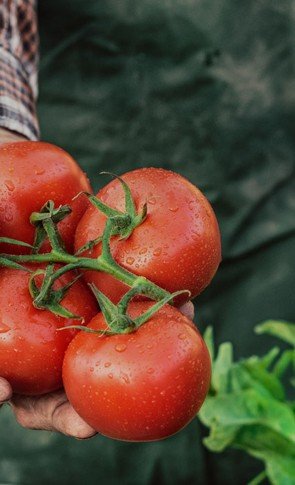
A Brandywine tomato can carry a century of history in a seed small enough to disappear beneath your thumbnail.
Perhaps its ancestors were saved by a farming family, traded over a fence, tucked into an envelope, and planted again the following spring. Somewhere along the way, a gardener chose the juiciest tomato, the earliest fruit, or the plant that stayed healthy through a difficult summer.
That history raises a reasonable question:
Are heirloom seeds genetically modified?
The short answer is no. Heirloom seeds are not genetically modified organisms, or GMOs.
They have, however, been shaped by human choices. Gardeners and farmers have spent generations saving seeds from plants with desirable traits. That traditional selection helped create many of the tomatoes, beans, peppers, flowers, and herbs we still grow today.
The important distinction is how those plants were developed.
Once you understand the difference between heirloom, open-pollinated, hybrid, and genetically modified seeds, the labels become much less mysterious—and choosing what belongs in your garden becomes much more enjoyable.
Are Heirloom Seeds Modified by People?
In the broadest sense, almost every familiar food crop has been influenced by people.
For thousands of years, gardeners and farmers have noticed differences between plants. One squash produced earlier. One pepper tasted sweeter. One bean handled drought better. One flower had an especially beautiful color.
They saved seeds from those plants and grew them again.
Imagine a gardener walking through a row of tomatoes near the end of summer. Most of the plants did reasonably well, but one remained productive despite the heat. Its fruit tasted wonderful, and the plant showed fewer signs of disease.
That gardener saved its seeds.
The following year, the best plants were selected again. After many generations, those repeated choices helped create a dependable variety.
This is called selective breeding, and it is not the same as genetic engineering.
Heirloom varieties were developed through ordinary pollination, careful observation, and seed saving. They were not created by directly altering genetic material in a laboratory.
So yes, heirlooms have been influenced by people.
But no, they are not GMOs.
What Makes a Seed an Heirloom?
There is no single legal definition that determines exactly when a variety earns the word heirloom.
Some gardeners use an age of 50 years as a general guideline. Others reserve the term for older varieties with a documented family, regional, or cultural history.
In practical gardening terms, an heirloom is usually:
- An older, named variety
- Open-pollinated
- Maintained through seed saving
- Capable of growing true to type
- Valued for its flavor, appearance, usefulness, or history
Some heirlooms were passed from one generation of a family to the next. Others were once sold in old seed catalogs and survived because gardeners continued growing them long after newer varieties appeared.
A bean does not need an exciting legend to be worth preserving.
Sometimes a variety survives for the simplest and best reason:
It grows well, tastes good, and somebody cared enough to plant it again.
What Does “True to Type” Mean?
One of the most useful qualities of heirloom seeds is that they generally grow true to type.
If you save seeds from an heirloom tomato and prevent it from crossing with another tomato variety, the next generation should resemble the parent. You can reasonably expect the same general fruit color, shape, flavor, and growth habit.
That does not mean every plant will be identical.
A tomato grown during a cool, rainy summer may perform differently from the same variety grown through weeks of heat. Soil, sunlight, water, pests, and ordinary genetic variation all influence the final plant.
True to type simply means the variety’s important characteristics remain recognizable from one generation to the next.
That predictability is what allows a gardener to save seeds this year and continue the variety next year.
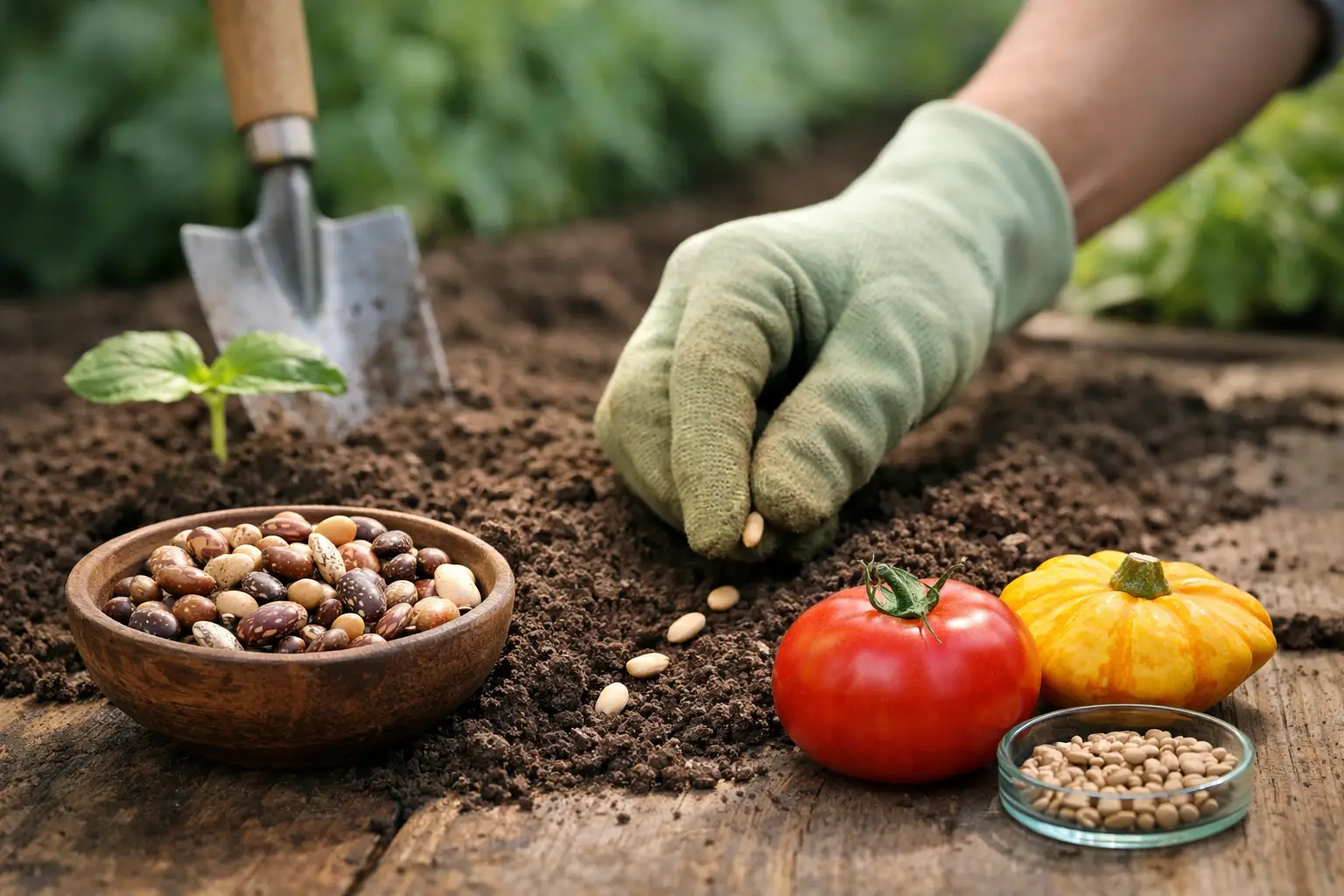
If you are new to the process, beans, peas, lettuce, peppers, and tomatoes are approachable places to begin. Before sowing saved or purchased seeds, our guide to how seeds germinate can help you give them the conditions they need.
Heirloom, Open-Pollinated, Hybrid, and GMO Are Not the Same Thing
These terms are often grouped together, but they answer different questions.
Here is the simplest way to think about them:
- Heirloom describes a variety’s history.
- Open-pollinated describes how it reproduces.
- Hybrid describes a deliberate cross between parent lines.
- GMO describes the use of genetic engineering.
A seed can be open-pollinated without being old enough to be considered an heirloom.
A seed can be hybrid without being genetically modified.
And an heirloom can be both open-pollinated and non-GMO.
Let’s dig into those differences.
What Are Open-Pollinated Seeds?
Open-pollinated plants reproduce through ordinary pollination by insects, wind, birds, or self-pollination.
When pollen comes from another plant of the same variety, the seeds will generally produce plants with the same recognizable traits.
All heirlooms are open-pollinated, but not every open-pollinated variety is an heirloom. Plant breeders continue developing new open-pollinated varieties today. These newer varieties can still grow true from saved seed even though they do not carry generations of history.
Open-pollinated seeds are especially appealing if you want to:
- Save your own seeds
- Maintain a favorite variety
- Select plants that perform well in your conditions
- Explore unusual flavors, colors, and forms
- Share seeds with friends and neighbors
There is one wrinkle worth knowing: some crops cross-pollinate more readily than others.
Beans, peas, lettuce, peppers, and tomatoes are largely self-pollinating, making them more approachable for beginning seed savers. Squash, corn, cucumbers, melons, and brassicas can cross with compatible varieties growing nearby.
If purity matters, those crops may require greater planting distance, physical barriers, hand pollination, or careful timing.
That is not a reason to avoid them.
It is simply another garden experiment waiting for you.
What Are Hybrid Seeds?
A hybrid seed is created by deliberately crossing two distinct parent lines of the same species.
The resulting first generation is usually labeled F1, meaning first filial generation.
Breeders create hybrids to combine specific traits. Those traits might include:
- Earlier maturity
- Compact plant growth
- Consistent fruit size
- Higher productivity
- Improved disease resistance
- A harvest that ripens within a shorter window
Hybridization uses controlled pollination.
It does not make a plant genetically modified.
A gardener could make a simple cross by transferring pollen from one tomato flower to another. Professional breeding programs perform that work much more carefully and repeatedly, but the underlying process still relies on plant reproduction.
Hybrids can be extremely useful.
If powdery mildew regularly ruins your cucumbers, a resistant hybrid may help. If your growing season is short, an early-maturing hybrid tomato might produce ripe fruit before cool weather returns. If you garden on a balcony, a compact hybrid squash or pepper may fit your space better than a sprawling heirloom.
The garden does not award extra points for struggling with the wrong variety.
Choose the plant that gives you the best chance to grow something worthwhile.
Can You Save Seeds From a Hybrid?
You can save seeds from an F1 hybrid, and some of them may germinate.
The catch is that the next generation will not reliably resemble the plant that produced the seeds.
Those offspring may display different combinations of traits from the hybrid’s parent lines. One plant might resemble one parent. Another may resemble the other. A third might produce something entirely unexpected.
That can be a fascinating experiment if you enjoy surprises.
It is less useful if you want the same dependable tomato, cucumber, or flower next season.
For repeatable results, gardeners generally purchase that hybrid variety again. If saving and replanting your own seed is the goal, choose an open-pollinated or heirloom variety instead.
What Are Genetically Modified Seeds?
Genetically modified seeds are developed using biotechnology that directly alters an organism’s genetic material.
This may involve adding, removing, or changing particular genetic traits in ways that are different from ordinary crossing and seed selection.
That is fundamentally different from saving seeds from your best bean plant or crossing two tomato varieties through controlled pollination.
For the home gardener, the practical answer is straightforward:
Heirloom seeds are not GMO seeds, and hybrid seeds are not automatically GMO seeds.
If avoiding genetically engineered seeds matters to you, look for clear non-GMO information from the seller. Do not rely solely on words such as natural, traditional, or heritage, since those terms may be used more loosely.
Why Is There So Much Confusion?
The word modified causes much of the trouble.
A gardener selecting seeds from the sweetest melon is influencing the next generation. A breeder crossing two pepper varieties is also influencing the next generation. Genetic engineering changes plants through a different process.
In everyday conversation, all three actions may be described as “modifying” a plant.
Scientifically and practically, they are not the same.
Seed packaging can add another layer of confusion. You may see several appealing labels together:
- Heirloom
- Open-pollinated
- Non-GMO
- Organic
- Heritage
- Naturally grown
These terms are not interchangeable.
Organic concerns how seed crops are produced and handled under an organic standard.
Non-GMO concerns genetic engineering.
Open-pollinated concerns reproduction and whether saved seeds can grow true.
Heirloom concerns a variety’s history and continued preservation.
None of those labels guarantees that a plant will thrive in your particular garden.
A treasured heirloom tomato may taste remarkable but struggle with a disease common in your region. A modern open-pollinated variety may handle your weather beautifully. A hybrid may be the most practical choice for a short season or small container.
The name on the label matters.
Your growing conditions matter more.
Are Heirloom Seeds Better?
Heirlooms can offer extraordinary flavor, unusual colors, memorable stories, and the opportunity to save your own seed.
That makes them wonderful.
It does not make them automatically better for every gardener, crop, or season.
An heirloom tomato that needs 90 warm days may never reach its potential in a short northern season. A disease-resistant hybrid might produce basket after basket while that celebrated heirloom struggles.
In another garden, the heirloom may become the undisputed star.
This is why we are fond of side-by-side experiments.
Plant the old favorite beside something unfamiliar. Grow an heirloom slicer alongside a dependable hybrid. Try two beans and notice which handles your soil, rainfall, and summer heat better.
Keep a few notes.
Taste everything.
Save seed from the plants that earn another season.
A garden can give you a more useful answer than a label ever will.
Should Beginning Gardeners Grow Heirlooms?
Absolutely.
Beginners are sometimes warned away from heirlooms as though every old variety is delicate and demanding. That simply is not true.
Many heirlooms survived precisely because generations of ordinary gardeners found them productive, useful, delicious, or beautiful.
The key is choosing varieties that match your conditions.
Before buying, consider:
- Your average first and last frost dates
- The number of warm growing days available
- The amount of sunlight in your garden
- Mature plant size
- Days to maturity
- Common diseases in your area
- Whether you plan to grow in beds or containers
- What your household genuinely wants to eat
If you are building your first garden, our seed collections for beginners can help you choose a manageable mix.
Starting small is not thinking small.
It gives you enough room to observe what is happening—and enough energy to enjoy it.
How to Read a Seed Listing Without Overthinking It
Start with the information that directly affects whether the plant can succeed in your space:
- Days to maturity: Is your growing season long enough?
- Plant size: Will the mature plant fit?
- Sun requirements: Does your garden receive enough direct light?
- Planting method: Should the seed be started indoors or sown outside?
- Disease resistance: Are any locally important resistances listed?
- Pollination type: Is it heirloom, open-pollinated, or hybrid?
- Seed-saving potential: Will the next generation grow true?
If a crop prefers to begin outside, our guide to direct sowing vegetable seeds will help you get it started.
For tomatoes, peppers, and other plants that benefit from an indoor head start, remember that germination is only the first step. Seedlings also need strong light, enough room, and a gradual introduction to outdoor conditions. Before planting day, read when to transplant seedlings without setbacks.
Grow the Story Forward
An heirloom seed carries history, but it is not trapped in the past.
The moment you plant it, the story continues in your garden.
Perhaps you will save seeds from the tomato that handled an unusually dry summer. Maybe you will share a handful of beans with a neighbor. Years from now, someone may grow flowers descended from the packet you opened today.
That is the quiet wonder of heirloom seeds.
They connect one growing season to another and one gardener to the next.
At Dollar Heirloom Seeds, we believe that connection should be open to everyone. That is why we keep our seed packets affordable. A new gardener should be able to try something unfamiliar, make a few mistakes, plant again, and discover the variety that feels as though it has always belonged in the garden.
Choose a dependable favorite.
Add one variety that makes you curious.
Save a few seeds if you can.
Share them when you have enough.
The heirloom did not reach your garden because every season went perfectly.
It reached you because somebody kept planting.
Now it is your turn.
Happy gardening, The DollarHeirloom Team