A tomato that thrives in your sticky summer heat, a bean that keeps producing when other plants quit, a pepper with exactly the flavor your family loves – those are worth keeping. Seed saving heirloom vegetables lets you carry those garden wins into next season for pennies, while slowly building a garden that fits your own patch of ground.
The process is not difficult, but it does reward a little planning. Start with a few forgiving crops, save seed from healthy plants, and learn which vegetables need distance from their relatives. One successful packet of saved seeds can become years of planting material.
Why heirloom vegetables are good candidates for seed saving
Most heirloom vegetables are open-pollinated. That means a plant can produce seed that grows into a plant much like the parent, provided it was not cross-pollinated by a different variety of the same crop. If you save seed from a favorite Cherokee Purple-type tomato, for example, you can reasonably expect next year’s plants to resemble it.
Hybrid vegetables work differently. A hybrid is created by crossing two carefully selected parent lines. Its seed may germinate just fine, but the next generation can vary widely in size, flavor, color, productivity, and disease resistance. Saving hybrid seed is still a perfectly good experiment, especially if you have room and curiosity, but it is less predictable.
Open-pollinated does not mean every seed will be identical. Gardens are living places, and natural variation happens. It does mean you have a reliable starting point and the chance to select plants that perform well where you grow.
Start seed saving with vegetables that make it easy
You do not need to save seed from every crop in your first year. Choose one or two vegetables that are easy to identify, simple to harvest, and unlikely to cross in a typical home garden.
Beans, peas, lettuce, and tomatoes are excellent first choices. Beans and peas mostly pollinate themselves, and their seeds dry right inside the pod. Lettuce is also largely self-pollinating, though you need to let the plant bolt and flower rather than harvest every leaf. Tomatoes are usually self-pollinating, particularly many common home garden varieties, though crossing can occasionally happen.
Peppers can cross readily with other peppers, and squash are famous for confusing new seed savers. Corn also cross-pollinates easily because its pollen travels on the wind. These crops are worth saving once you have the basics down, but they take more attention to isolation or hand-pollination.
A helpful rule is to save seed from varieties that are clearly labeled and are the only variety of that crop you are growing. If you grow three kinds of cucumbers or several summer squash varieties close together, enjoy the harvest, but consider buying fresh seed for those crops next year unless you deliberately managed pollination.
Choose the plants, not just the produce
Seed saving starts before harvest. As your garden grows, notice which plants earn a small tag, ribbon, or piece of twine. Mark plants that stay healthy, produce well, and give you vegetables you actually want to eat.
Avoid saving seed from a plant that struggled with disease, produced poor-quality fruit, or was unusually weak. One imperfect fruit does not make a plant unsuitable, of course. Weather, pests, and a missed watering can affect any plant. Look at its overall performance across the season.
For crops such as beans, tomatoes, peppers, and squash, select seed from more than one good plant when possible. Saving from several plants preserves more genetic diversity, which can help keep a variety vigorous over time. In a small garden, even seed from two or three strong plants is a meaningful improvement over relying on a single survivor.
Also let seed crops reach true maturity. The tender zucchini you pick for dinner is nowhere near ready to provide viable seed. The same is true for green beans and snap peas. Seed needs time to mature fully on the plant, often well past the stage when the vegetable tastes best.
How to collect dry seeds
Dry-seeded crops include beans, peas, lettuce, many herbs, and some flowers. Wait until pods, heads, or seed stalks are brown and dry. Beans and peas are ready when pods turn crisp and rattle. If rain is expected and the crop is nearly ready, pull whole plants or cut stalks and finish drying them indoors in a dry, airy spot.
Shell beans and peas over a bowl, then remove bits of pod and damaged seeds. For lettuce, clip the fluffy seed heads into a paper bag and rub them gently between your hands. Chaff is normal. You do not have to separate every tiny fragment, but remove as much as is practical.
Spread cleaned seeds in a single layer on a plate, paper towel, coffee filter, or screen for another week or two. They should feel hard and dry before storage. A seed that bends, dents, or feels cool and soft inside is not dry enough yet.
How to save seeds from tomatoes and other wet fruits
Tomatoes need one extra step because their seeds are coated with a gel that can inhibit germination. Scoop seeds and gel into a small jar, add a little water, and leave it at room temperature for two to four days. A light moldy film may form on top. It looks unappealing, but it is part of the fermentation process that helps remove the coating.
Once the seeds settle and the gel loosens, pour off floating pulp and rinse the good seeds in a fine strainer. Spread them thinly on a coffee filter, paper plate, or piece of uncoated paper. Do not use a hot oven or direct blazing sun to speed things up. Gentle airflow is safer than heat.
For peppers, scoop out seeds from a fully ripe pepper and dry them in a single layer. A green bell pepper is edible, but a pepper left to turn red, yellow, orange, or its mature final color generally holds more mature seed. Eggplant seed should come from fruits that are overripe by kitchen standards, with dull skin and firm, mature seeds inside.
Prevent unwanted crosses when it matters
Whether you need to prevent crossing depends on the crop and your goal. If you are saving bean seed for your own use, a small chance of variation may not bother you. If you want to preserve a named variety faithfully or share seed with friends, it is worth being more careful.
Distance can help, but the needed distance varies greatly by crop, local pollinators, wind, and nearby gardens. In a backyard, bagging blossoms or using a fine mesh cage is often more realistic than trying to create large isolation distances. With squash and cucumbers, you can hand-pollinate a female flower early in the morning, tape or clip it closed afterward, and label that fruit for seed.
Remember that squash types matter. Zucchini and many pumpkins are often the same species, Cucurbita pepo, so they can cross even though they look very different. A butternut squash is usually a different species, Cucurbita moschata, and will not cross with zucchini. Variety names alone do not tell the whole story.
Store saved seeds like they matter
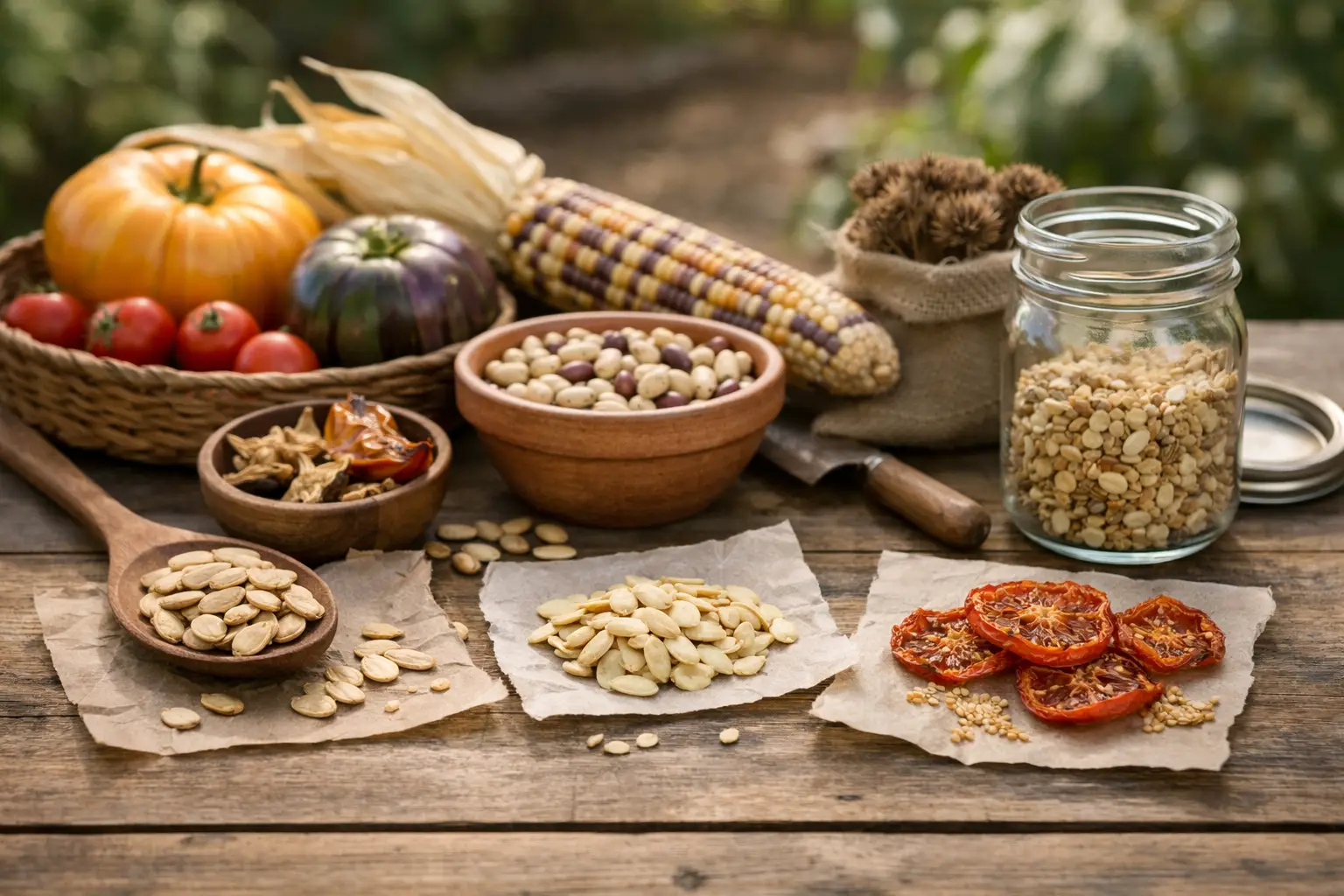
Seeds last longest when they are dry, cool, dark, and protected from humidity. Label every packet or jar with the crop, variety, and year. This takes seconds now and prevents a surprising amount of mystery next spring.
Paper envelopes work well for fully dry seed stored in a dry home. Small glass jars are useful too, especially if you live where summer humidity lingers. If using a sealed container, make sure seeds are thoroughly dry first. Trapped moisture can ruin a whole batch.
A closet, basement shelf, or refrigerator can work, depending on the conditions in your home. Avoid places that swing between hot and cold, such as a garage or shed. Most vegetable seeds remain useful for several years when stored well, though onions, parsnips, and similar short-lived seeds are best used quickly.
Before planting older seed, test a few seeds on a damp paper towel in a container or plastic bag. If only a handful sprout, sow more thickly or replace that seed. Germination tests are simple, and they make spring planning less of a guess.
Let your garden teach you what to keep
The first season of saving seed may be a little messy. You might mislabel a jar, dry a batch longer than necessary, or discover that the mystery squash from last year really is a mystery. That is normal. Start small enough that the learning feels fun, not high-stakes.
Each saved seed carries a bit of observation: this bean handled heat, this lettuce stayed sweet longer, this tomato was worth the wait. Planting those choices again is one of the quiet pleasures of gardening. Save what you love, label it well, and let next year’s garden surprise you.