How to Grow Container Vegetables From Seed
You don’t need a big garden to grow a surprising amount of food.
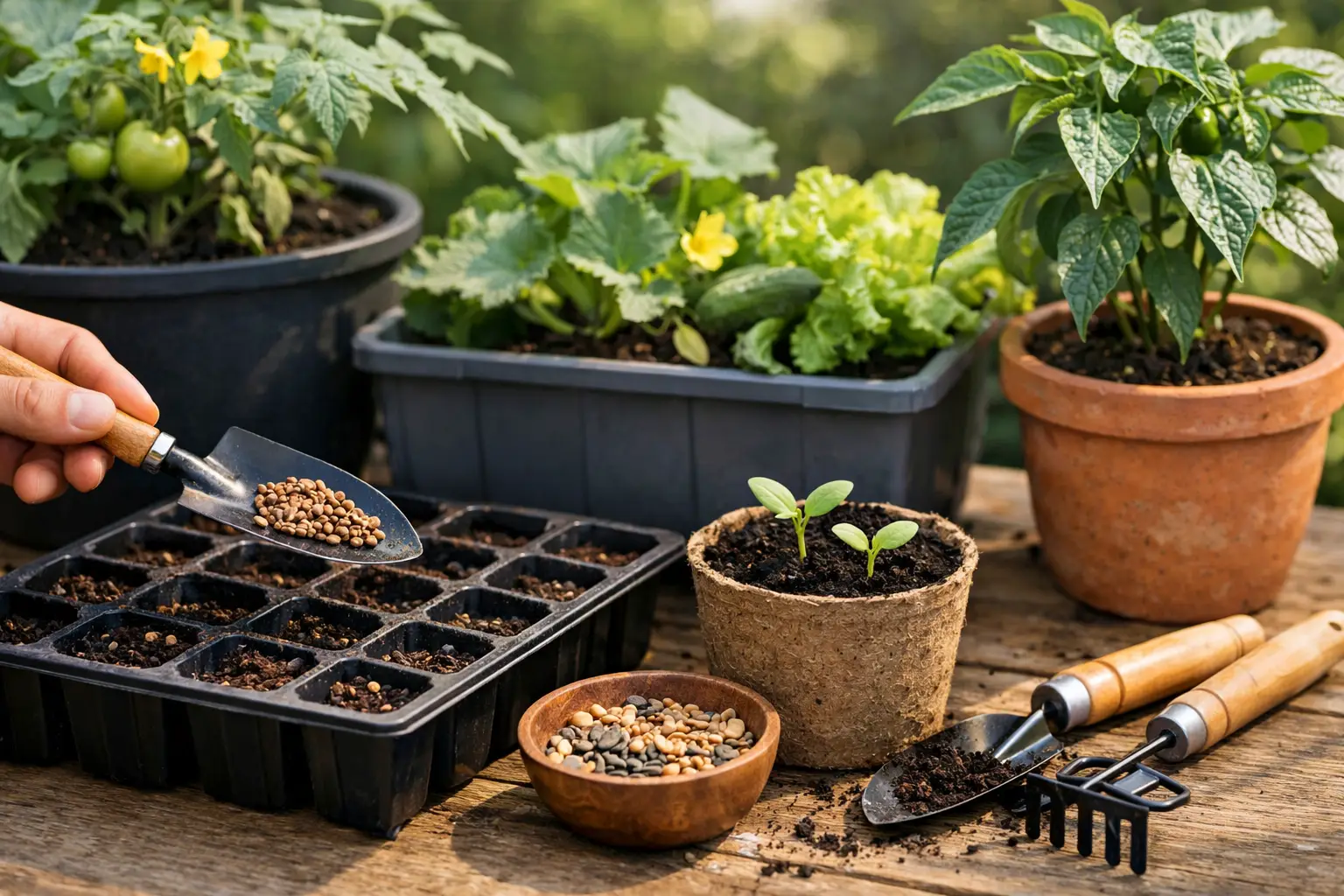
A sunny patio, balcony, porch, or driveway can become a very productive little garden with a few containers and a handful of seeds.
And container gardening has one big advantage: it’s easy to experiment.
Try one tomato. Plant a pot of lettuce. Grow beans along a railing. If something works, do more of it next year. If it doesn’t, you’ve learned something without digging up half the yard.
A container garden is still a real garden. It’s just a smaller laboratory.
Start With Vegetables That Actually Like Containers
You can technically grow almost any vegetable in a container if the container is large enough.
That doesn’t mean you should.
For a first container garden, start with plants that naturally fit the space.
Lettuce, radishes, bush beans, kale, herbs, green onions, peppers, peas, and compact tomatoes are all good choices.
Our Container Vegetables collection is a good place to start because these varieties are well suited to smaller spaces.
A few especially easy choices include Little Gem Romaine Lettuce, Premier Kale, and Sugar Daddy Snap Peas.
Tomatoes and cucumbers can also do beautifully in containers, but they need more soil, more water, and usually some support.
A Sweetie Cherry Tomato in a large pot or a Lemon Cucumber climbing a small trellis can produce a remarkable amount of food from very little space.
Bigger Pots Make Gardening Easier
Container size matters.
Not because plants are particularly demanding, but because more soil gives you more room for error.
A larger container holds moisture longer, stays cooler, and gives roots more room to grow.
That’s good for the plant and good for the gardener.
As a rough starting point:
- Lettuce and small greens can grow in relatively shallow containers.
- Radishes need only modest depth.
- Bush beans and herbs appreciate somewhat larger pots.
- Peppers generally do well in 3- to 5-gallon containers.
- Tomatoes are much happier with at least 5 gallons, and 10 gallons is even better.
- Cucumbers need a reasonably large container plus something to climb.
And every container needs drainage holes.
You do not need expensive planters.
Food-safe buckets, nursery pots, grow bags, old containers, and inexpensive plastic pots can all grow vegetables perfectly well.
The plant doesn’t care what the container cost.
Use Potting Mix, Not Dirt From the Yard
This is one place where container gardening is different from gardening in the ground.
Garden soil usually becomes too dense in a pot.
Use a decent potting mix instead.
Potting mix stays lighter, drains properly, and still holds enough moisture for roots.
Fill the container almost to the top, leaving an inch or two so water doesn’t immediately run over the sides.
And skip the old advice about putting gravel in the bottom.
It doesn’t improve drainage. It mostly takes away root space.
Good potting mix and drainage holes do the job.
Plant for the Season You’re Actually In
Containers warm up faster than garden soil, which can be helpful in spring.
But vegetables still have opinions about temperature.
Cool-season crops such as lettuce, spinach, kale, peas, radishes, and arugula like cooler weather.
Warm-season vegetables such as tomatoes, peppers, beans, cucumbers, and squash want warmth.
Don’t rush them.
A beautiful warm afternoon in April doesn’t mean summer has arrived.
Beans and cucumbers are especially easy to direct sow right in their containers once the weather warms.
Tomatoes and peppers usually benefit from being started indoors several weeks earlier, especially in areas with shorter summers.
Your seed packet will give you the basics.
Then your weather gets the final vote.
Plant a Few Extra Seeds
We aren’t big believers in treating every seed like a museum piece.
Plant a few extra.
For larger vegetables like tomatoes, cucumbers, beans, and peppers, sow two or three seeds and keep the strongest seedling.
For lettuce, radishes, and greens, sow somewhat generously and thin later.
And thinning isn’t necessarily waste.
Tiny lettuce, kale, and radish seedlings can often go straight into a salad.
That’s a pretty good fate for a plant that didn’t make the final cut.
Seeds are inexpensive. Empty garden space isn’t very productive.
That’s one of the reasons we sell $1 seed packets. Gardening should make it easy to try things.
Containers Need More Attention to Water
This is probably the biggest difference between containers and garden beds.
Containers dry out faster.
Sometimes much faster.
Windy balconies and sunny patios can dry the top few inches of soil surprisingly quickly.
While seeds are germinating, keep the surface consistently moist.
Once plants are established, water deeply until water runs from the drainage holes, then let the surface begin to dry before watering again.
Large containers make this much easier.
A tiny pot may need watering every day in summer. A large container gives you some breathing room.
Tomatoes and cucumbers especially dislike swinging from bone dry to soaking wet.
Consistency beats perfection.
Use the Sun You Actually Have
Most fruiting vegetables want at least six hours of direct sun, preferably more.
Tomatoes, peppers, cucumbers, and beans generally reward extra sunlight with better production.
Leafy vegetables are more forgiving.
Lettuce, kale, spinach, parsley, and cilantro can often produce nicely with less sun and may actually appreciate some afternoon shade during hot weather.
Before you plant, watch your space for a day.
That patio that looks sunny at breakfast may be completely shaded by noon.
Rather than fighting your location, grow what fits it.
That’s a useful gardening rule far beyond containers.
Feed Them, But Don’t Go Crazy
Plants growing in the ground can send roots searching for nutrients.
Plants in containers are stuck with whatever you’ve put in the pot.
Eventually, they’ll need feeding.
A slow-release fertilizer mixed into the potting mix or a regular vegetable fertilizer used according to directions is usually enough.
Tomatoes, peppers, and cucumbers are heavier feeders than lettuce and radishes.
But don’t assume more fertilizer means more vegetables.
Too much fertilizer can produce a magnificent green tomato plant with hardly any tomatoes.
The goal is vegetables, not foliage.
Grow Up When You Run Out of Room
One of the easiest ways to make a small container garden more productive is to use vertical space.
Peas, pole beans, cucumbers, and some tomatoes can all grow upward.
A simple trellis, tomato cage, railing, or stake can turn a few square feet into a surprisingly productive growing area.
Install supports early.
Putting a tomato cage around a six-inch plant is easy.
Trying to wrestle one over a three-foot tomato is considerably less entertaining.
When Something Fails, Try Again
Seeds don’t always germinate.
Plants don’t always thrive.
Lettuce bolts. A tomato gets stressed. Something eats the bean seedlings.
It happens.
Container gardening makes trying again unusually easy.
Dump the pot.
Refresh the soil.
Plant something else.
Or simply sow another round of seeds.
Browse our Fast Growing Vegetables or Easy Vegetables to Grow and try something different.
A failed $1 packet isn’t a catastrophe.
It’s information.
And sometimes the vegetable you almost didn’t bother planting ends up becoming your favorite thing in the garden.
Start With a Few Pots
There is no prize for having the most containers.
Start with a few you can actually care for.
A tomato.
A container of lettuce.
Some beans.
Maybe a pot of basil beside the kitchen door.
Learn how quickly your containers dry out, how much sun your space really gets, and which vegetables seem happiest there.
Then add more.
That’s how gardens grow anyway.
Not all at once.
One experiment at a time.
Happy gardening, The DollarHeirloom Team