How to Plant a Pollinator Seed Mix for Bees
You don’t need a wildflower meadow to help pollinators.
A garden bed, a raised bed, or even a few large pots can provide bees and butterflies with a steady source of nectar while adding color to your yard. We’ve grown pollinator mixes in all three, and each works surprisingly well.
The biggest mistake? Scattering seed over existing grass and hoping for the best. A little preparation makes all the difference.
Choose the Right Seed Mix
Bees need flowers from spring through fall, not just one big flush of blooms.
The best pollinator gardens include flowers with different bloom times, colors, and flower shapes. Annuals like zinnias, cosmos, and sunflowers bloom quickly, while perennial wildflowers establish more slowly but often return for years.
If you’re looking for an easy place to start, our Bee Loving Wildflower Seed Mix was designed to provide a long season of blooms. You can also browse our full collection of Pollinator-Friendly Flower Seeds and create your own mix.
One thing we’ve learned at DollarHeirloom is that every garden is different. Plant a mix, watch what thrives, and let the bees tell you which flowers they like best.
Where to Plant
Most pollinator flowers need at least 6 hours of direct sunlight each day.
Garden Beds
Remove existing grass and weeds before planting. Loosen the top few inches of soil, rake it smooth, and avoid adding large amounts of fertilizer. Most wildflowers perform better in average garden soil than rich, heavily fertilized soil.
Raised Beds
Raised beds are one of our favorite places to grow pollinator flowers. They warm up quickly in spring, drain well, and are easy to keep weed-free.
Prepare the soil just as you would for vegetables, but skip heavy fertilizing. Flowers generally produce more blooms in moderately fertile soil.
Pots and Containers
Pollinator mixes also grow well in large containers.
Choose a pot at least 12-16 inches wide with drainage holes and fill it with a quality potting mix. Containers dry out faster than garden beds, so they’ll need more frequent watering during hot weather.
Smaller containers are best planted with fewer varieties so the flowers have room to develop.
How to Sow the Seeds
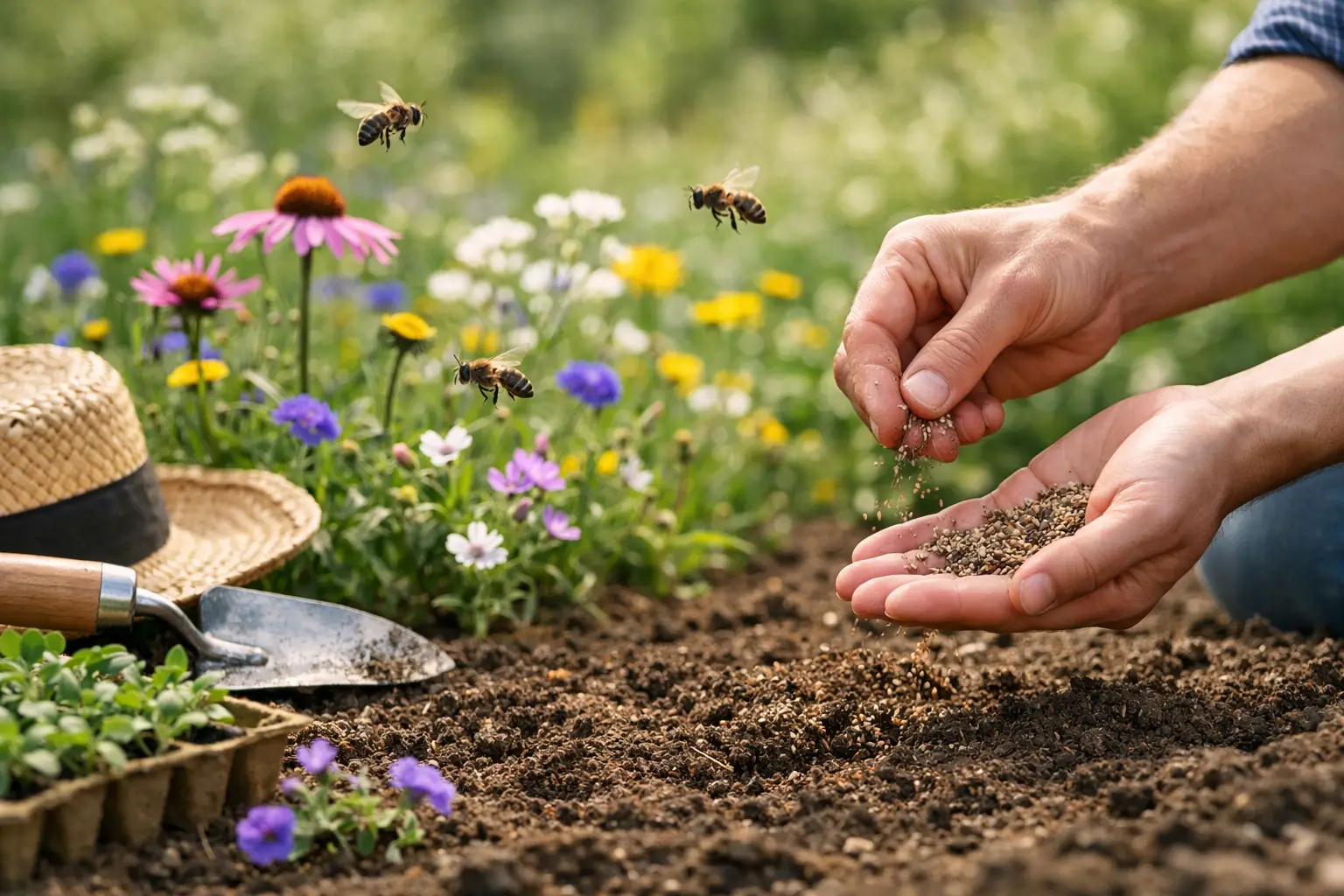
Because pollinator mixes contain seeds of many different sizes, mix them with a little dry sand before planting. It helps distribute the seed much more evenly.
For garden beds and raised beds:
- Scatter half the seed while walking in one direction.
- Scatter the remainder while walking across the area.
- Press the seed firmly into the soil without burying it deeply.
For containers:
- Scatter the seed evenly across the pot.
- Lightly press it into the surface with your hand or a small board.
- Cover only lightly if needed—many wildflower seeds need light to germinate.
Water gently after planting and keep the soil consistently moist until seedlings become established.
Spring or Fall?
For most gardeners, spring is the easiest time to sow a pollinator mix.
Plant after your last expected frost.
Many native perennial wildflowers can also be planted in fall, allowing winter weather to naturally prepare the seeds for spring germination. If you’re interested in longer-term habitat, explore our Wildflower Seed Mixes.
Don’t expect an instant meadow. Annual flowers usually bloom the first year, while many perennials spend their first season building strong roots.
Let the Garden Teach You
One of the best parts of growing pollinator flowers is seeing what happens.
Some flowers become magnets for honey bees. Others attract bumble bees, butterflies, hummingbirds, or native bees you may have never noticed before.
Keep track of what performs well, then plant more of those varieties next season.
That’s one of the ideas behind DollarHeirloom. Affordable seed packets make it easy to experiment without spending a fortune. Every season teaches you something new.
A Few Favorites
If you’d like to expand your pollinator garden, take a look at:
- Bee Loving Wildflower Seed Mix
- Power Pollinator Poppy Mix
- Pollinator-Friendly Flower Seeds
- Wildflower Seeds & Mixes
Start Small
You don’t need acres of flowers to make a difference.
Whether you plant a raised bed, a sunny border, or a few containers on the patio, you’ll be creating food for pollinators—and adding beauty to your own garden at the same time.
Start with one small patch this year. You may be surprised how quickly it becomes one of your favorite parts of the garden.
Happy gardening, The DollarHeirloom Team