How to Direct Sow Vegetable Seeds Successfully
A packet of seeds doesn’t look like much. A few beans. A pinch of lettuce. A handful of carrots.
But put them in the ground at the right time, give them some water, and that little packet can become months of fresh vegetables.
That’s the beauty of direct sowing.
Direct sowing simply means planting seeds where they’re going to grow instead of starting them indoors and transplanting them later. For many vegetables, it’s the easiest, least expensive, and often the best way to grow them.
No grow lights. No trays. No potting mix. Just seeds, soil, water, and a little patience.
And if something doesn’t grow? Plant it again.
That’s gardening.
What Vegetables Can You Direct Sow?
A surprising amount of the vegetable garden can be planted directly from seed.
Carrots, radishes, beets, peas, beans, corn, lettuce, squash, cucumbers, pumpkins, and melons can all be direct sown. Root crops especially benefit from being planted where they’ll grow because transplanting can disturb the root you’re eventually hoping to harvest.
Some vegetables, particularly tomatoes, peppers, and eggplants, usually benefit from an indoor head start in much of the country.
But plenty of vegetables don’t need all that fuss.
If you’re new to gardening, start with a few forgiving varieties from our Easy Vegetables to Grow or Fast Growing Vegetables collections.
Radishes, beans, lettuce, cucumbers, and summer squash are particularly satisfying because you don’t have to wait forever to see something happen.
And seeing something happen is important when you’re learning.
Don’t Plant by the Calendar Alone
One of the easiest mistakes to make is seeing a beautiful April afternoon and deciding summer has arrived.
The seeds may disagree.
Cool-season vegetables such as peas, spinach, lettuce, carrots, radishes, beets, kale, Swiss chard, and turnips actually prefer cooler conditions. Many can be planted as soon as the soil is workable in spring and again in late summer for a fall crop.
Warm-season vegetables—including beans, corn, cucumbers, squash, pumpkins, melons, and okra—want warm soil.
Plant them too early and they may sit there doing nothing. Worse, they may rot before they germinate.
Sometimes waiting another week produces seedlings faster than planting a week earlier.
Your average last frost date is a useful guide, but it’s just that—a guide. Pay attention to the weather and your soil.
Gardening rarely cares what the calendar says.
Give Seeds a Decent Place to Start
Seeds don’t need perfect soil.
They do need a fighting chance.
Remove weeds and large rocks, loosen the top few inches of soil, break up large clumps, and rake the surface reasonably smooth.
That’s usually enough.
Compost is always helpful. It improves heavy clay, helps sandy soil hold moisture, and gradually makes almost any garden soil better.
But don’t convince yourself that you need to create perfect soil before you can grow anything.
You don’t.
Improve it as you go. Gardens get better over time.
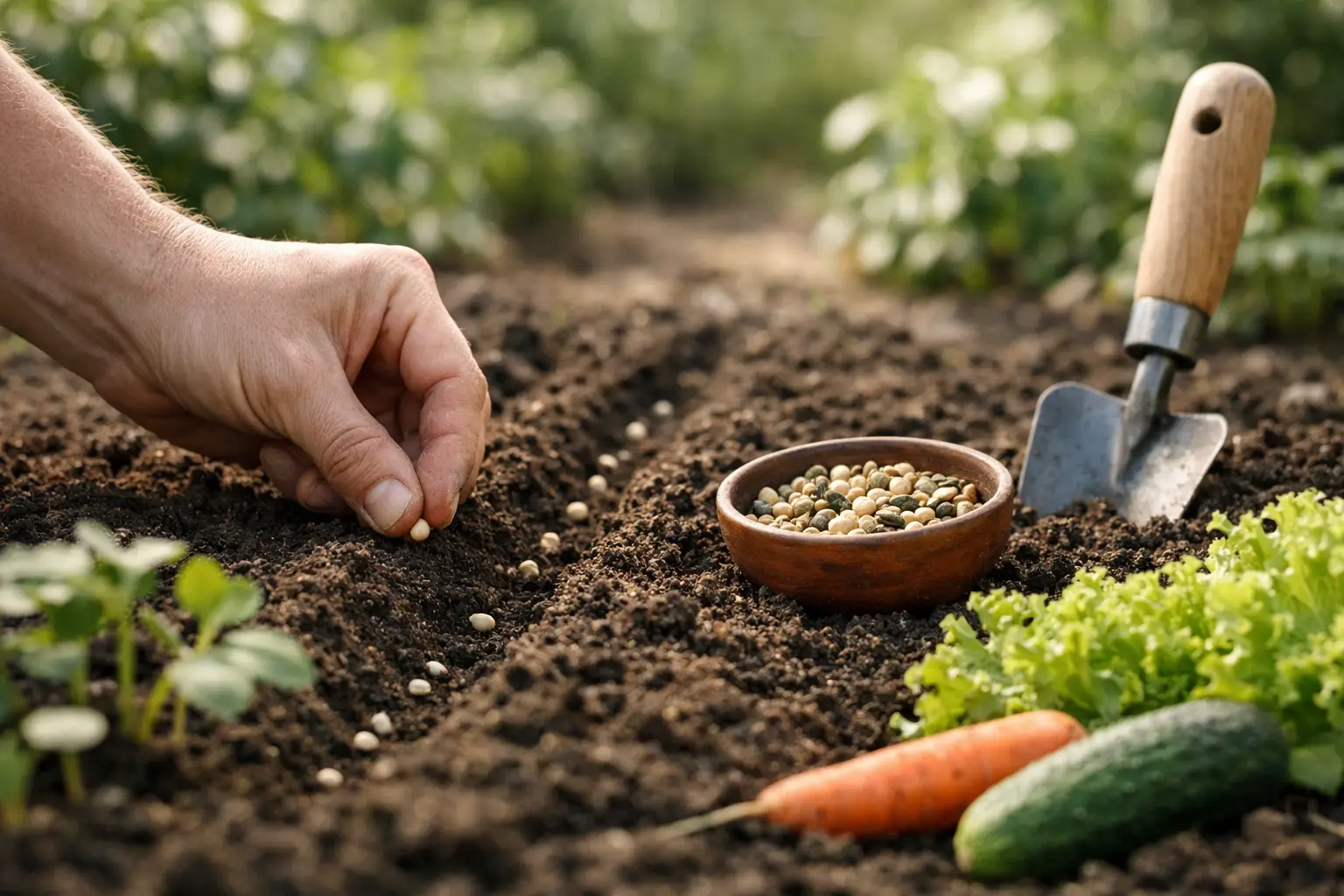
Don’t Bury Your Seeds
Planting seeds too deeply is one of the most common direct-sowing mistakes.
A useful general rule is to plant a seed about two to three times as deep as the seed is wide.
Tiny carrot and lettuce seeds barely need covering. Beans, peas, corn, and squash can go considerably deeper.
When in doubt, follow the instructions on the packet.
And don’t be afraid to plant generously.
New gardeners sometimes carefully ration seeds as though every seed needs its own assigned parking space. Then a few don’t germinate and they’re left with half a row.
We’d rather plant a few extra seeds and thin later.
Seeds are inexpensive. Your garden space and growing season are more valuable.
Our Vegetable Seeds collection includes everything from carrots and lettuce to beans, cucumbers, corn, squash, tomatoes, and peppers, so trying another variety doesn’t have to be a major investment.
That’s rather the point.
Keep the Soil Moist Until They Germinate
Once you’ve planted, the most important thing you can do is keep the seed zone consistently moist.
Not soaked.
Not muddy.
Just moist.
Small seeds are especially vulnerable because they’re planted close to the surface, where a sunny or windy day can dry the soil surprisingly quickly.
Water gently so you don’t wash the seeds away. A watering can, gentle hose nozzle, or soft spray works well.
Once seedlings are established, begin watering more deeply and less frequently. That encourages roots to grow downward instead of staying near the surface.
There isn’t one perfect watering schedule.
Your soil will tell you what it needs.
Expect Something to Eat Something
You planted a garden.
Unfortunately, you’ve also opened a restaurant.
Birds may discover your bean seedlings. Slugs may find your lettuce. Flea beetles can turn young radish leaves into Swiss cheese. Rabbits occasionally seem capable of eating an entire row while you’re making coffee.
Welcome to gardening.
Keep an eye on young seedlings, pull weeds while they’re small, and use lightweight row cover or netting when you actually need it.
One old trick we particularly like is planting a few radish seeds alongside carrots. Radishes germinate quickly and mark the row while the carrots take their sweet time.
Then you get to eat the row markers.
Hard to argue with that.
If It Doesn’t Grow, Plant It Again
This may be the most important direct-sowing advice in the entire article.
Not every planting works.
Maybe the soil was too cold. Maybe you planted too deeply. Maybe it dried out. Maybe it rained for six straight days. Maybe a bird had breakfast.
Sometimes you’ll never know.
Plant again.
One of the reasons we sell $1 seed packets is that we don’t think gardeners should be afraid to experiment. Try another variety. Plant another row. Put cucumbers somewhere different this year. See what happens.
A failed $1 packet of seeds isn’t a gardening disaster.
It’s an experiment that cost a dollar.
And occasionally the second planting grows beautifully while the first one did absolutely nothing.
Gardens are funny that way.
Plant a Little Now and a Little Later
You also don’t have to plant everything at once.
Succession sowing simply means planting smaller amounts every week or two instead of planting the entire packet on one Saturday morning.
It’s especially useful with quick-growing crops like lettuce and radishes.
Plant a short row today. Another in ten days. Another after that.
Instead of 30 radishes becoming ready simultaneously—and suddenly discovering exactly how many radishes one family can eat—you get a steady harvest over several weeks.
It also spreads your risk.
If one planting gets hammered by weather or pests, the next one may be perfectly fine.
Every Garden Is an Experiment
There are plenty of rules in gardening.
They’re useful.
But eventually you’ll discover that your garden has rules of its own.
One variety will grow beautifully while another struggles ten feet away. Something you’re told is difficult will grow effortlessly. Something described as “easy” will refuse to cooperate.
That’s part of what makes gardening interesting.
At DollarHeirloom, we don’t think gardening is about getting everything right the first time.
We’d rather see people plant more things.
Try more varieties.
Fail occasionally.
Learn something.
And plant again.
Browse our vegetable seeds, pick a few things you’ve never grown before, and put some seeds in the ground.
You might be surprised what comes up.
Happy gardening, The DollarHeirloom Team