Why You Should Grow More Than One Variety
One of the easiest ways to become a better gardener is to stop looking for the “perfect” variety.
Instead, grow two.
A row of tomatoes can thrive one year and struggle the next. Spring may stay cool. Summer may turn hot and dry. Disease may arrive early. Every variety responds differently, which is why we almost always recommend planting more than one.
It does not take a larger garden. It simply gives your garden more ways to succeed.
Don’t Put All Your Hope in One Variety
Every variety has strengths.
One tomato may produce early. Another may tolerate disease better. One lettuce may resist bolting. One bean may handle heat surprisingly well.
When you plant only one variety, you are betting everything on those particular strengths.
Planting two or three spreads the risk. If one struggles, another often shines.
Gardening is unpredictable. Variety is one of the simplest forms of insurance.
Your Garden Is Different From Everyone Else’s
Seed packets and gardening books offer good advice, but they cannot predict your backyard.
Your soil, weather, rainfall, sunlight, and watering habits are unique.
The only way to discover what truly thrives is to experiment.
Try two tomatoes instead of one.
Grow two kinds of beans.
Plant a familiar basil beside one you’ve never tried.
Within a season or two, you’ll know more about your own garden than any generic growing guide can tell you.
Plant One Favorite and One Experiment
This is one of our favorite approaches.
Grow the variety you already trust.
Then make room for something new.
Maybe it’s a purple bean, an unusual tomato, or a basil you’ve never tasted.
Some experiments become permanent favorites.
Others simply teach you something.
Both are worthwhile.
That’s one reason we keep our seed packets affordable. Experimenting should feel exciting, not expensive.
Flowers Count Too
We believe every vegetable garden should include flowers.
Not because they’re beautiful—although they are—but because they attract pollinators, support beneficial insects, and make the garden somewhere you enjoy spending time.
A few zinnias, marigolds, or sunflowers can make the entire garden feel more alive.
Sometimes the flowers become the unexpected favorite of the season.
Keep It Simple
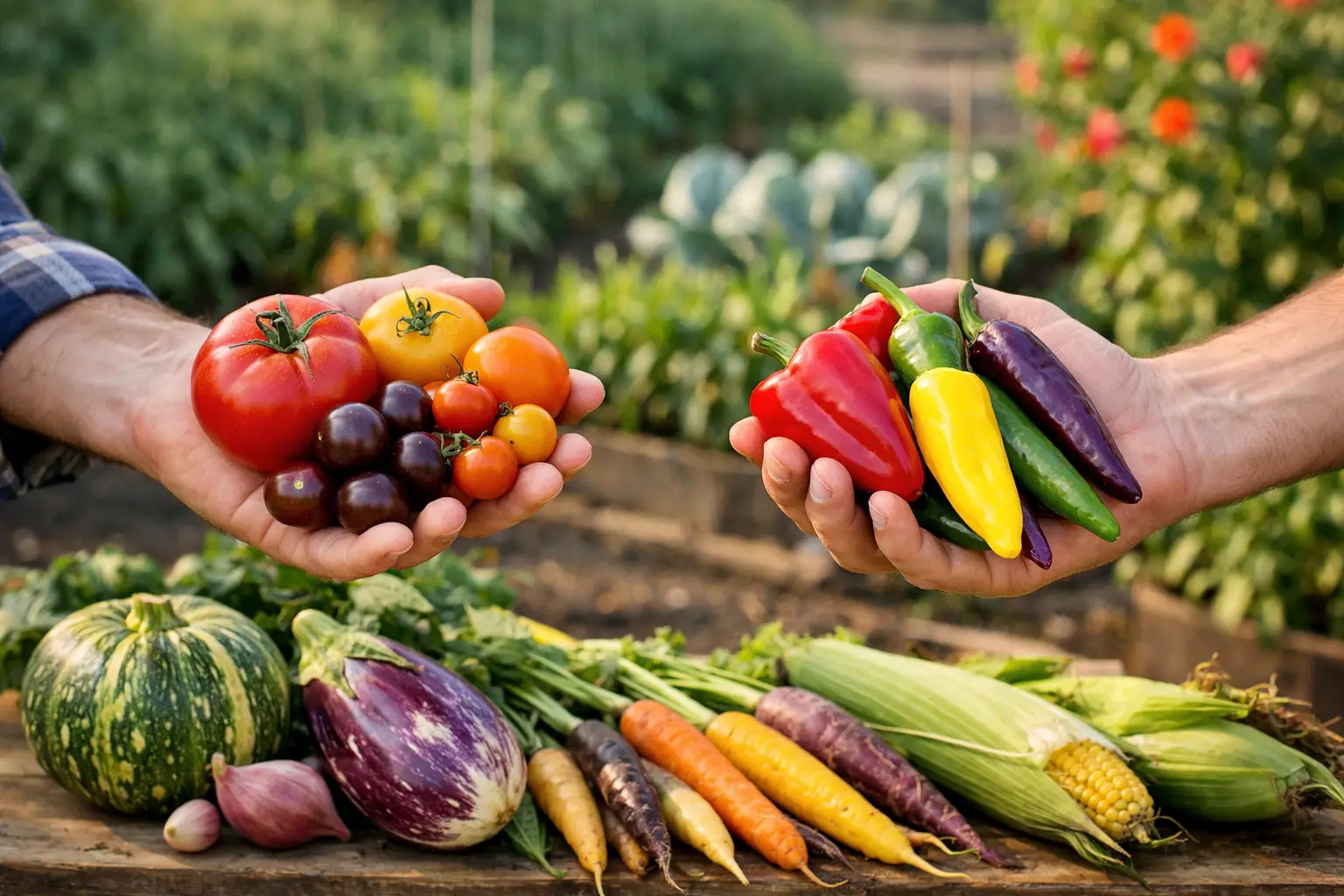
Growing more than one variety doesn’t mean planting twenty different tomatoes.
Start with one thoughtful comparison.
- A cherry tomato and a slicing tomato.
- A bush bean and a pole bean.
- Green basil and purple basil.
- Two different zinnias.
Small experiments are easy to manage and surprisingly rewarding.
Let the Garden Decide
Keep a few simple notes each season.
Which bean produced first?
Which tomato handled the heat?
Which flowers attracted the most bees?
Those observations become your best gardening guide because they come from your own garden.
Over time you’ll build a collection of varieties that truly belong in your yard.
And every year, leave room for one more experiment.
That’s how better gardens are built—not by getting everything right, but by staying curious.
Happy gardening, The DollarHeirloom Team