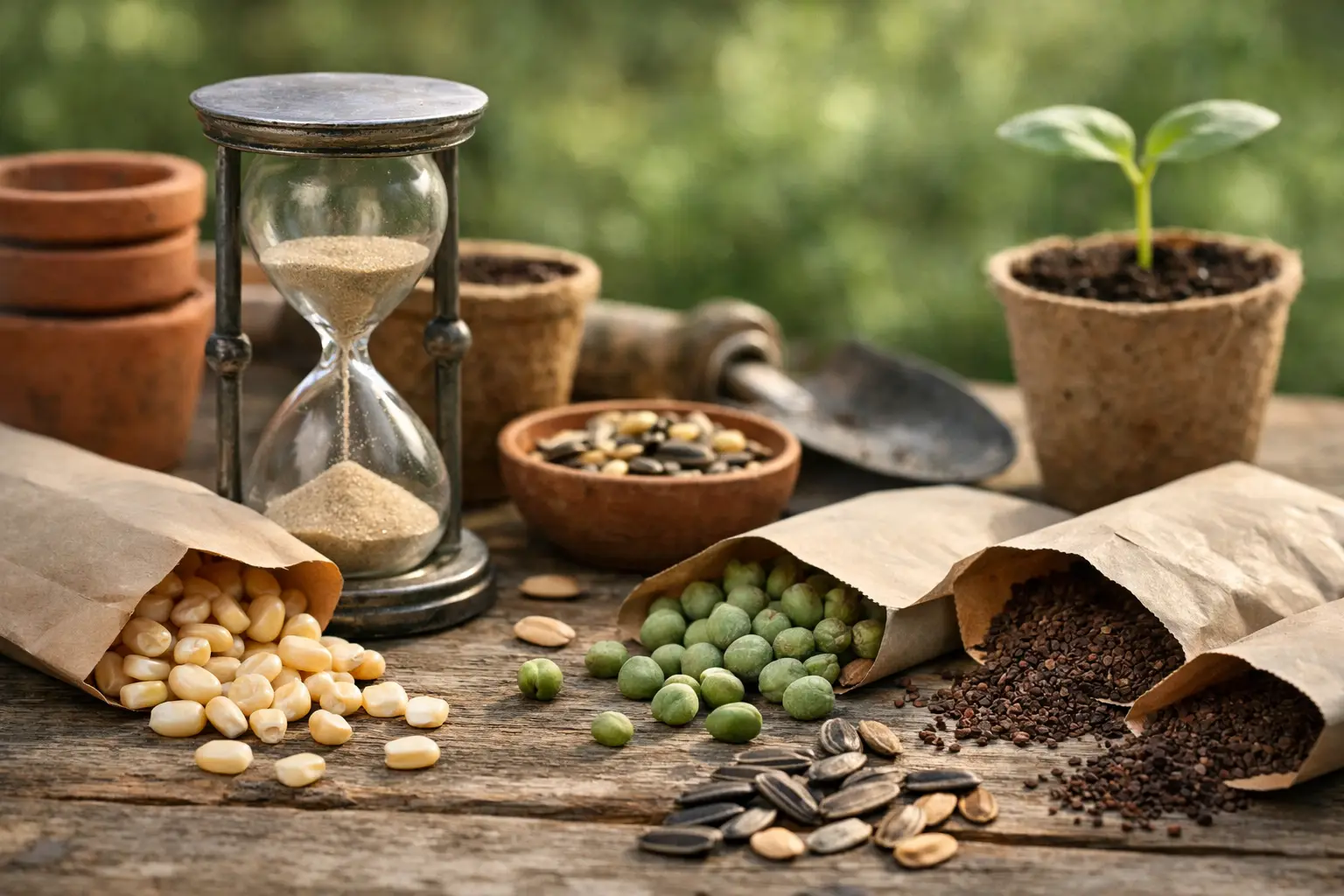
A packet of leftover tomato seeds can feel like a tiny gardening mystery. Do seeds expire, or can you plant them years later and hope for the best? The honest answer is that seeds do not usually expire on a single, predictable date. Instead, their ability to germinate gradually declines over time.
That does not mean last year’s packets are a lost cause. Many garden seeds remain useful for several seasons when stored well, and some can surprise you by sprouting long after their expected shelf life. A quick test and a little planning can help you decide whether to plant, replace, or simply sow a few extra seeds.
Do Seeds Expire or Just Lose Viability?
Seeds are living plant embryos in a resting state. They need the right moisture, temperature, and oxygen conditions to wake up and grow. While they wait, natural aging slowly affects the seed. Heat, humidity, and frequent temperature swings speed that process along.
A seed packet’s date is generally a guide to expected germination, not a hard expiration date. Fresh seed may have a high germination rate, meaning most seeds planted should sprout under good conditions. As seed ages, fewer may germinate, and the seedlings that do emerge can sometimes be less vigorous.
This is why an older packet can still be worth planting. If only half of the seeds are viable, you can often compensate by sowing more thickly, then thinning seedlings later. For an inexpensive packet or a variety you are curious about, it is often worth a try.
How Long Do Common Garden Seeds Last?
Storage conditions matter as much as the calendar, so treat these ranges as practical guidelines rather than promises. Seeds kept cool, dark, and dry can last longer. Seeds left in a hot shed or humid garage may lose viability much sooner.
Short-lived seeds
Onion, leek, parsnip, and salsify seeds are known for shorter storage lives. They are best planted within a year, though carefully stored seed may sometimes make it into a second season. If you are relying on older onion or parsnip seed for an important row, testing it first can save you from an empty bed.
Seeds that often last two to four years
Lettuce, corn, peppers, carrots, spinach, peas, beans, and many herbs commonly remain usable for a few years. Their germination can decline gradually, especially after the packet has been opened, but they are often worth trying before replacing.
Seeds that can last longer
Tomatoes, brassicas such as broccoli and cabbage, cucumbers, melons, squash, pumpkins, radishes, and beets often store well for four years or longer in good conditions. Flower seeds vary widely. Calendula, marigold, zinnia, and cosmos are usually forgiving, while some native plants and wildflowers have more specific needs and may benefit from being planted fresh.
Native plant seeds deserve special attention. Some require cold, moist conditions before they will germinate, a process called cold stratification. A seed that does not sprout may be dormant rather than dead, so check the planting needs for that species before deciding the packet has failed.
What Makes Seeds Go Bad Faster?
The two biggest enemies of stored seed are moisture and heat. Dampness can cause mold, rot, or premature metabolic activity. Heat wears down viability, particularly when seed packets spend a summer in a greenhouse, car trunk, porch box, or uninsulated shed.
Light is less damaging than moisture and heat, but a dark storage spot is still a good habit. Open packets also need protection from household humidity. Folding the packet closed is better than leaving it open, but placing several packets inside a sealed jar, food-storage container, or zip-top bag is more dependable.
A closet in a climate-controlled home is usually a better choice than a garage. If you have room in the refrigerator, seeds can store well there too, as long as they are protected from moisture. Let refrigerated seeds warm to room temperature before opening the container, which helps prevent condensation from forming on them.
How to Store Seeds for Next Season
You do not need special equipment to give seeds a good home. Start by keeping each variety labeled with its name and the year you bought or saved it. If the original packet is torn, move the seeds into a small paper envelope and write the details on the outside.
Then place packets in an airtight container with a small moisture absorber, such as a silica gel packet saved from a shipment. Keep the container somewhere cool, dry, and away from direct sun. A refrigerator is useful for gardeners with a large seed collection, while a cabinet inside the house works well for many home gardens.
Avoid storing seeds where conditions change constantly. A kitchen cabinet above the stove, for example, may be convenient but warm. A basement can be cool but may be too damp. Choose the most stable spot you have rather than chasing a perfect setup.
Test Older Seeds Before You Plant
A simple germination test tells you whether an old packet deserves space in the garden. It works especially well for larger seeds such as beans, peas, cucumbers, and squash, but you can test smaller seeds too.
Moisten a paper towel until it is damp but not dripping. Spread 10 seeds across one half, fold the towel over them, and place it in a labeled plastic bag or container. Keep it at room temperature in a bright spot out of direct sun. Check it every day or two and make sure the towel stays moist.
After the usual germination period for that crop, count the seeds that have sprouted. If eight of 10 seeds germinate, you have roughly 80 percent germination. If only three sprout, the seed may still be usable, but sow more heavily or consider buying fresh seed for a larger planting.
Do not test every seed in a packet, especially if you only have a few. Testing 10 gives an easy percentage, but five seeds can still offer a useful clue. For very old or precious seeds, plant the test seeds carefully in a small pot instead of a paper towel so any sprouts can continue growing.
When Fresh Seed Is Worth Buying
Older seed is a sensible experiment when you have extra room and do not mind uneven germination. It is less ideal when timing matters. For example, if you need a full row of carrots for summer harvest, want enough onion seedlings for storage, or have a short growing season, fresh seed offers more confidence.
Fresh seed is also a good choice when you are trying a crop for the first time. Starting with strong germination makes it easier to tell whether a problem came from the seed or from planting conditions. Once you have a season or two of experience, saving leftovers and testing them becomes much less intimidating.
For seeds with low test results, there is a middle path. Use them in a small experimental patch, a container, or a dense sowing for baby greens. You may get a useful harvest without depending on them for your whole garden plan.
Make Room for a Few Experiments
A dated seed packet is not a verdict on your garden. It is an invitation to observe, test, and adjust. Save the seeds that still have promise, replace the ones you truly need, and plant a few extra when you are unsure. Every seed that sprouts is a small reminder that gardens leave room for second chances.