When to Transplant Seedlings Without Overthinking It
A tomato seedling can look ready for the garden long before the garden is ready for the tomato.
That is one of spring’s little traps.
A few warm afternoons arrive, the seedlings are getting crowded under the lights, and suddenly it feels as though everything should be planted outside immediately. Experienced gardeners fall for this too. We know better, check the forecast, and still occasionally decide that one beautiful Saturday means winter is over.
Sometimes we get away with it.
Sometimes we spend the next week covering plants with old sheets.
Deciding when to transplant seedlings is not really about finding one perfect date. It is about looking at the plant, the weather, the soil, and the next several nights, then giving the seedling a fair chance to grow.
Get reasonably close and most seedlings will be fine. Plants are tougher than they look.
Look at the Seedling First
Most seedlings are ready to begin moving outdoors after they have developed at least one or two sets of true leaves.
The first little leaves that appear after germination are called cotyledons. They feed the young seedling but usually do not look much like the plant’s mature foliage. The leaves that come next are the true leaves.
Once those appear, the seedling is beginning to behave like an actual plant.
A good transplant should look green, compact, and sturdy. Tall is not necessarily better. A shorter seedling with a strong stem and healthy roots will usually adjust more easily than one that has stretched toward the light and become thin and floppy.
Gently slide the plant from its container and look at the roots. Ideally, the root ball should hold together without being wrapped in a solid knot of circling roots. A few white roots around the outside are perfectly fine. They mean the plant is ready to explore something larger.
Different seedlings leave home at different sizes.
Lettuce, kale, broccoli, cabbage, onions, and other cool-season plants can often be transplanted while still fairly small. Tomatoes, peppers, eggplants, and basil usually benefit from more time indoors.
A large seedling, however, is not automatically ready.
A six-inch pepper plant still does not want to spend the night outside when temperatures are in the 40s. A much smaller cabbage seedling may be perfectly content.
The plant matters, but the weather gets the final vote.
Your Frost Date Is a Guide, Not a Promise
Your average last frost date is useful. It gives you a reasonable idea of when spring usually settles down in your area.
Usually is doing a lot of work in that sentence.
An average frost date does not mean frost becomes impossible the following morning. Cold air settles into low areas. Open gardens cool faster than protected ones. One yard can escape frost while another a few miles away wakes up white.
Warm-season plants such as tomatoes, peppers, eggplants, cucumbers, melons, squash, and basil should generally wait until the danger of frost has passed.
Tomatoes usually settle in well once nighttime temperatures remain above about 50°F. Peppers and eggplants prefer it warmer. Planting them early may not kill them, but several chilly nights can stop their growth and leave them sitting there looking offended.
Waiting another week often gets you to the same harvest with healthier plants and considerably less worrying.
Cool-season vegetables are different. Lettuce, onions, kale, cabbage, broccoli, chard, and similar crops can handle chilly spring weather. Many can be transplanted two to four weeks before the last expected frost if they have been hardened off and the soil is workable.
That is one reason it is useful to grow more than one kind of vegetable. The cool-season garden can be getting started while your tomato seeds are still becoming sturdy little plants indoors.
Spring does not have to arrive all at once.
Neither does the garden.
Check the Soil, Not Just the Afternoon Temperature
A sunny 70°F afternoon can make planting feel overdue.
The soil may disagree.
Soil warms much more slowly than air, especially after a cold winter or several days of rain. Warm-season seedlings planted into cold, wet soil may survive, but they often stop growing. Leaves can become pale or develop a purple tint, and the plant may remain the same size for what feels like forever.
Tomatoes are fairly forgiving. Peppers, eggplants, cucumbers, melons, squash, and basil are less enthusiastic about cold roots.
As a general guide, wait until the soil is at least around 60°F before transplanting most warm-season vegetables. Peppers and melons are usually happier when it is warmer still.
A basic soil thermometer is inexpensive and useful, but you can also learn a great deal by paying attention.
Does the soil still feel cold and sticky? Are nighttime temperatures still jacket weather? Have the warm-season weeds barely begun to appear?
It may be too early.
Raised beds often warm before the surrounding ground, especially when they receive plenty of sun. Heavy clay and shaded beds usually warm more slowly. If you are growing in a smaller space, our guides to raised bed vegetable gardening and container vegetables can help you make the most of those warmer little growing spaces.
Harden Off Seedlings Before Transplanting
Indoor seedlings have lived a very sheltered life.
The light is predictable. There is no wind. Rain does not suddenly arrive sideways. Temperatures do not drop 25 degrees after sunset. Even strong grow lights are gentler than direct outdoor sun.
Moving a seedling from that protected life directly into the garden is a little like sending someone from the couch into a ten-mile hike.
Hardening off gives plants time to adjust.
Start about seven to ten days before you plan to transplant. On the first day, place the seedlings outdoors for an hour or two in a sheltered, shady location. Bring them back inside afterward.
Gradually increase their time outdoors each day. Add a little morning sun, then longer periods of light. Let them experience a gentle breeze. By the end of the process, they should be able to spend a full day outside and, if temperatures are safe, remain outdoors overnight.
The schedule is not sacred.
Watch the plants.
White or bleached patches usually mean they received too much direct sun too quickly. Wilting can mean heat, wind, or dry potting mix. A mild, cloudy week may let you move faster. A hot, windy week may require more patience.
If the plants look unhappy, give them an easier day.
Hardening off is not about tough love. It is about building confidence slowly, which is useful advice for gardeners too.
Choose a Kind Day to Transplant
Seedlings have a much easier move on a calm, cloudy day or in late afternoon.
That gives them the evening and overnight hours to settle in before facing strong sun. If possible, avoid transplanting during the hottest, driest, windiest part of the day.
Water the seedlings a few hours before planting. Moist potting mix usually holds together better around the roots, making the plant easier to remove from its container.
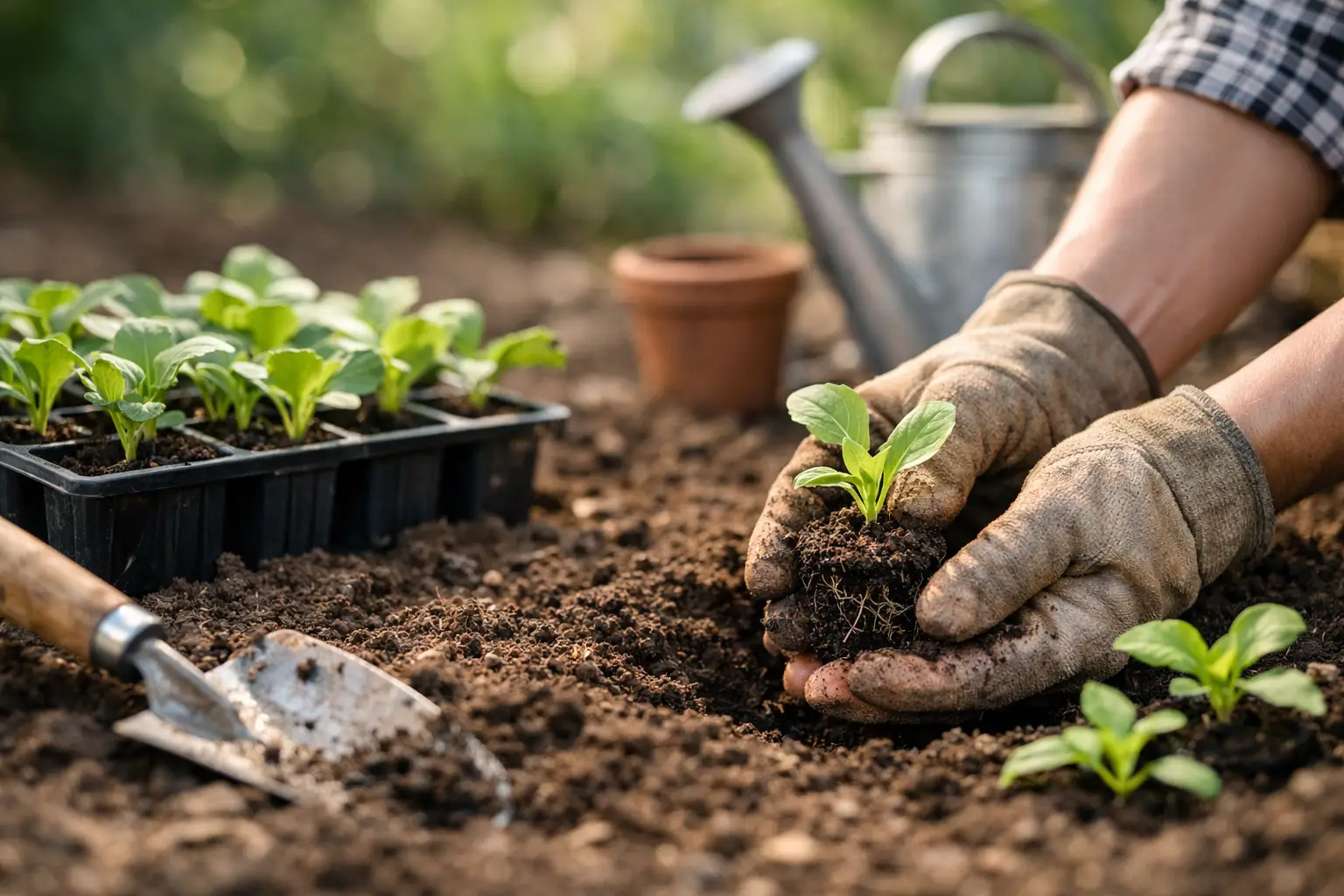
Prepare the planting hole before taking the seedling from its pot. Handle the plant by its leaves or root ball, not by its stem. A torn leaf can be replaced. A crushed main stem usually cannot.
Plant most seedlings at approximately the same depth they were growing in their containers.
Tomatoes are the famous exception. They can form roots along buried portions of their stems. Remove the lowest leaves and plant a leggy tomato more deeply, leaving the healthy top growth above the soil. The buried stem can develop additional roots and produce a sturdier plant.
After planting, press the soil gently around the root ball and water deeply. You want to settle the soil around the roots, not pack it into concrete.
If you still have empty garden space after transplanting, many crops can be planted directly from seed. Our guide to direct sowing vegetable seeds covers the vegetables that are often happier starting exactly where they will grow.
Give New Transplants a Little Help
Even a healthy, properly hardened seedling may droop after transplanting.
It just had its entire world rearranged.
A day or two of transplant stress is normal, especially if the roots were disturbed. Keep the surrounding soil evenly moist during the first week, but do not keep it soggy. The goal is to encourage roots to move outward into the garden.
Temporary protection can make a big difference.
Row cover, frost cloth, a cloche, or even an overturned flowerpot can protect a plant during one unexpectedly cold night. Remove the cover after temperatures rise and make sure the plant gets light and airflow.
In hot weather, newly transplanted lettuce, flowers, and tender vegetables may appreciate temporary afternoon shade. A piece of shade cloth, lattice, or even a lawn chair positioned thoughtfully can help for the first couple of days.
There is no prize for making a seedling face everything at once.
Hold off on heavy fertilizer too. If your soil needs fertilizer, use it reasonably, but more is not automatically better. Pushing a newly transplanted seedling into rapid leafy growth before its roots are established can create a large plant on a very small foundation.
Good soil, steady moisture, and a little patience are usually enough.
If You Transplanted Too Early, Do Not Panic
Nearly everyone plants something too early eventually.
Sometimes we misread the forecast. Sometimes the weather changes. Sometimes the seedlings are taking over the kitchen and we decide they simply have to go.
A surprise cold spell does not always mean starting over.
Cover tender plants before sunset with frost cloth, sheets, or lightweight blankets. Support the covering so it does not crush the foliage, and remove it the next morning once temperatures rise.
Do not place plastic directly against leaves during a freeze. Plastic can transfer the cold and damage the tissue it is supposed to protect.
If a plant is frost-burned, wait a few days before pulling it. Tomatoes and some other vegetables can recover if the stem and growing tip remain healthy. Damaged leaves may look terrible while new growth is already preparing to emerge.
Peppers and basil are less likely to recover from serious cold, but losing a few seedlings is not a gardening failure.
It is gardening.
Replace them if you can. Plant something different if you cannot. Choose a few forgiving varieties from our Easy Vegetables to Grow and keep going.
A garden is not ruined because one planting did not work.
Good Timing Is Thoughtful, Not Perfect
Every season teaches you something about your own yard.
You learn where frost settles. You discover which bed warms first. You notice that the garden beside the south wall is ready before the bed shaded by the garage. You learn that one variety handles a chilly spring beautifully while another would prefer to wait until June.
That knowledge cannot be found on a national planting calendar because it belongs to your garden.
Start with your frost date. Check the forecast. Feel the soil. Harden off the seedlings. Then choose a reasonably gentle day and give them a good drink after planting.
That is enough.
You do not need perfect timing. Experienced gardeners do not have perfect timing either. They simply pay attention, make their best guess, protect plants when they can, and try again when something does not work.
The goal is not to get every seedling into the garden on the earliest possible day.
The goal is to give each one a fair chance to grow.
Then step back and let it surprise you.
Happy gardening, The DollarHeirloom Team