The Four Things Every Garden Needs: Sun, Soil, Water, and Drainage
You can make gardening sound awfully complicated if you try.
There are soil tests, fertilizer ratios, irrigation systems, planting calendars, amendments, grow lights, raised beds, and enough advice online to make a first garden feel like something you should study for.
But plants have been growing for a very long time without reading any of it.
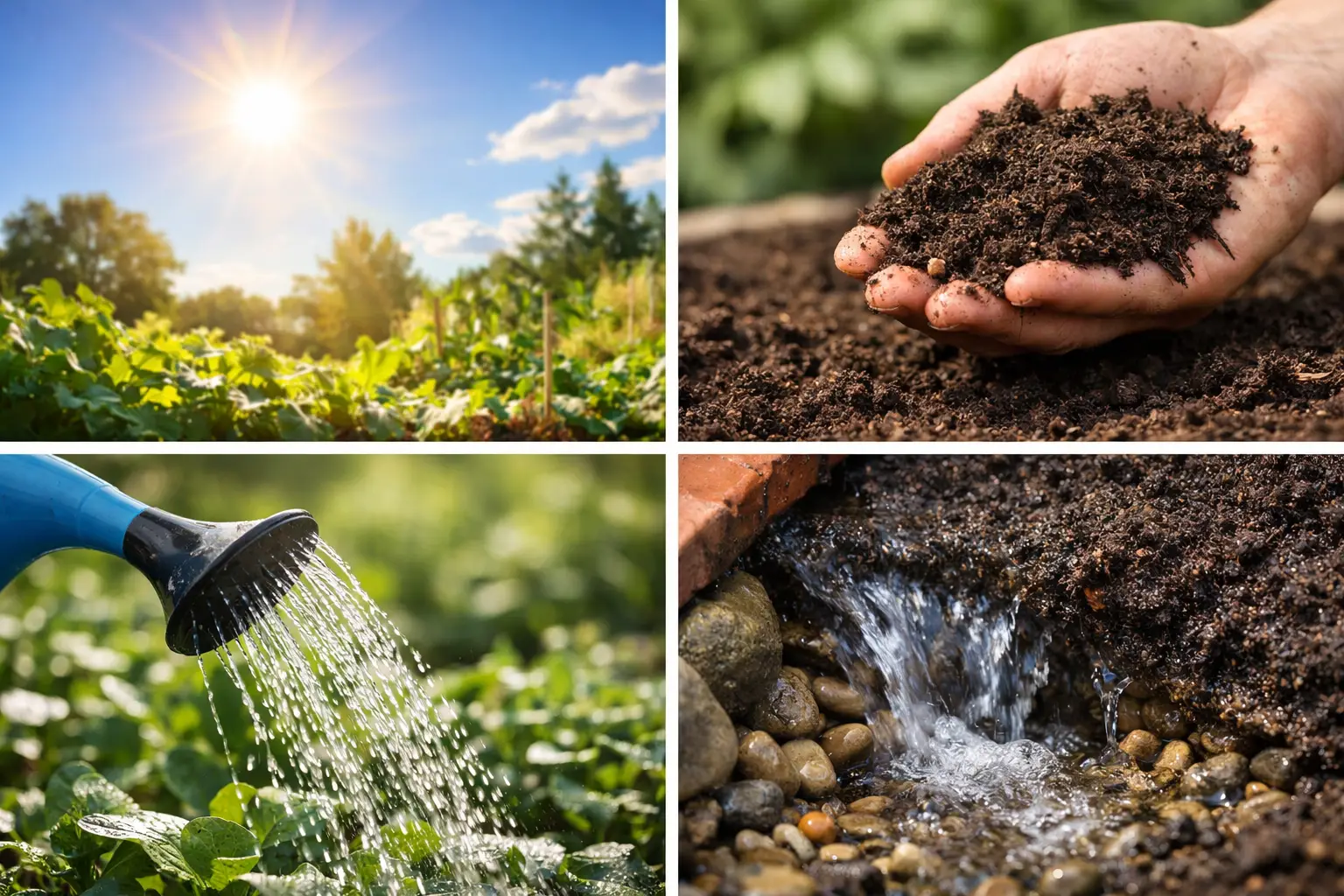
If you want to grow a good garden, start with four things: sun, soil, water, and drainage. Get those reasonably right and you have given your plants a very good start. The rest is learning, experimenting, and occasionally wondering why the tomato you barely paid attention to is doing better than the one you fussed over all summer.
That is gardening.
And the nice part is that none of these four things needs to be perfect.
1. Sun: Find the Brightest Place You Have
If you have a sunny spot, you have possibilities.
Tomatoes, peppers, cucumbers, squash, beans, melons, and many of the flowers we love want plenty of direct sun. Six to eight hours is a good target for most fruiting vegetables, and more is often welcome.
So before you build a bed, haul in soil, or buy anything, watch your yard for a day. Where does the morning sun land? What is still sunny at three in the afternoon? Which spot only looks sunny because you usually walk past it at noon?
You may discover that the best garden spot is not where you expected it to be.
That is useful information, not bad news.
You Can Garden With Less Sun Too
A yard without eight hours of sun is not a yard without a garden. Lettuce, spinach, kale, chard, cilantro, parsley, and other leafy crops can often do quite well with less. In hot climates, a little afternoon shade can even be a gift.
And if the sunny part of your property happens to be the patio, driveway edge, front steps, or deck, put the garden there. Plants do not care whether you had a more picturesque location in mind.
Containers can turn a small patch of sun into a surprisingly productive garden. If that sounds like your space, our guide to growing container vegetables from seed will get you started.
The simple rule: work with the light you have. A tomato does not become more determined because we really, really want it to grow in the shade.
2. Soil: It Does Not Have to Be Perfect
Garden soil is one of those subjects that can get complicated fast.
It does not have to.
Roots need soil that holds some moisture, drains reasonably well, contains nutrients, and is loose enough to grow through. If you have beautiful dark loam, congratulations. If you have clay that could probably be turned into pottery, you can still garden. If you have sand, you can still garden. If you have tired-looking dirt around a new house, you can improve it.
Start with what you have.
Compost Fixes a Lot of Ordinary Problems
Finished compost is one of the easiest ways to make almost any garden soil better. It helps sandy soil hold moisture and helps heavy soil become easier to work. Add some each year and the change can be remarkable.
You do not need to replace all your soil. You do not need twelve different bags of amendments. And you definitely do not need to wait until the soil is perfect before planting anything.
Loosen it if it is compacted. Add compost. Plant something. Mulch when it makes sense. See how things grow.
Then make it a little better next year.
That is how gardens are built.
Raised beds can be especially useful if your native soil is difficult or if you simply want a garden that is easier to reach and manage. Our raised bed vegetable guide has ideas for making a smaller bed surprisingly productive.
Do You Need a Soil Test?
For a big in-ground vegetable garden, a basic soil test is a smart idea. It can tell you the pH and whether your soil actually needs the fertilizer you are thinking about adding.
But if a soil test is the thing standing between you and planting your first packet of radishes, plant the radishes.
You are allowed to begin before you know everything.
3. Water: Pay Attention Instead of Watching the Calendar
This may be the gardening answer nobody likes: how often should you water?
It depends.
A tomato growing in a black container on a hot patio might need water every day in July. The same tomato growing in clay soil under a layer of mulch may not. A rainy week changes everything. So does wind. So does plant size.
The better skill is not memorizing a watering schedule. It is learning to notice when your garden needs water.
Stick a finger into the soil. Scratch down with a trowel. Pick up a container and notice how heavy it feels after watering. Pay attention for a few weeks and you will begin to know your garden.
That confidence is worth more than a chart on the refrigerator.
Seeds Are the Exception
Newly planted seeds need a little more babysitting.
Small seeds are close to the surface, and the surface can dry surprisingly fast. While they are germinating, keep that top layer consistently moist. Not swampy. Not muddy. Just moist.
Once plants have established roots, you can usually water more deeply and less often. Deep watering encourages roots to go looking for moisture instead of hanging around at the surface waiting for the next sprinkle.
If you are planting straight into the garden, we go deeper into this in How to Direct Sow Vegetable Seeds Successfully. Direct sowing is beautifully simple when you get those first few days right.
Mulch Is Your Friend
A layer of straw, shredded leaves, or another suitable mulch can slow evaporation, keep soil temperatures steadier, and make weeds much less enthusiastic.
Less watering. Fewer weeds. Better soil as the organic material breaks down.
That is a pretty good return for something that mostly just lies there.
4. Drainage: Give the Extra Water Somewhere to Go
This is the one beginners do not hear enough about.
Plants need water, but roots also need air. If the soil stays soaked for too long, roots struggle. Seeds can rot. Plants turn yellow. And because a struggling plant can look wilted, the natural reaction is sometimes to give it even more water.
The poor plant was trying to tell us the opposite.
Good drainage simply means the soil can hold the moisture plants need while the extra water gets away.
You Do Not Need a Drainage Engineering Degree
After a normal rain, take a look at the spot where you want to garden. Is it pleasantly damp a while later, or is it still a puddle long after the rest of the yard has drained?
If water regularly sits there, you have choices. Improve heavy soil with organic matter. Grow in a raised bed. Choose another spot. Use containers.
And containers need holes in the bottom. Actual holes. A layer of gravel inside a pot is not a substitute for giving the water somewhere to leave.
Drainage is not glamorous, but neither is watching a perfectly good plant drown.
The Fun Part: These Four Things Change Everything Else
Once you start paying attention, the garden begins to make more sense.
Your sunniest bed dries faster. The shady corner stays damp longer. A raised bed drains beautifully but needs water sooner. Clay holds moisture for days. A container that was easy to keep watered in May suddenly seems thirsty every afternoon in July.
You begin making small adjustments without even thinking much about them.
That is experience.
Not memorizing every gardening rule. Knowing your own little patch of ground.
Eventually you stop asking, “How often am I supposed to water?” and start asking, “Does this need water?”
You stop wondering whether you have the “right” soil and start noticing what grows beautifully in yours.
And you may discover that the odd tomato you tried for no particular reason loves your garden. If you have enough sun and want to run that experiment, our tomato seed collection gives you plenty of $1 ways to try.
Your First Garden Does Not Need to Be Impressive
It just needs to grow something.
Start smaller than the garden in your head. A few containers. One raised bed. A ten-foot row. Something you can walk past every day and notice.
Choose the sunniest practical spot. Give the roots decent soil. Keep seeds moist while they get started. Water the plants when they need it. Make sure extra water can escape.
Then plant things you are excited to see come up.
A radish because it is fast. A bean because watching it climb is ridiculously satisfying. A tomato because nothing from the grocery store tastes quite like one that is still warm from the sun. A row of zinnias because a garden is allowed to be beautiful for no practical reason at all.
If you want a few forgiving vegetables while you build confidence, take a look at our Easy Vegetables to Grow. Easy does not mean guaranteed. It just means you are giving yourself pretty good odds.
And If Something Does Not Grow?
Welcome to the club.
Experienced gardeners are not people who never lose plants. They are people who have lost enough plants to stop taking it personally.
Maybe the soil was too cold. Maybe you watered too much. Maybe you forgot to water at all. Maybe a rabbit ate the evidence before breakfast. Sometimes you will know exactly what went wrong. Sometimes you will have absolutely no idea.
Plant something else.
That is a big part of why DollarHeirloom exists. We sell small, affordable packets because experimenting should be part of the fun. Try another variety. Put flowers among the vegetables. Grow the purple carrot. Plant something you cannot pronounce. If it works, wonderful. If it does not, you learned something for a dollar.
A garden should build confidence, not make you afraid to get things wrong.
So give your garden some sun. Give the roots decent soil. Give your plants water. Give the extra water somewhere to go.
Then get some seeds in the ground.
Something will surprise you.
That may be the best part.
Happy gardening, The DollarHeirloom Team