How to Prevent Leggy Seedlings Without Overthinking It
A tray of tomato seedlings leaning toward the window can look almost organized, as though they all agreed overnight which direction to go.
They did not.
They are looking for light.
Leggy seedlings are tall, thin, and often a little floppy. They are common when seeds are started indoors, especially during late winter when we are ready for spring but the sun is still keeping winter hours.
The good news is that legginess is not a mysterious seedling disease. It is usually a message.
More light, please.
Possibly less heat.
Maybe a little more room.
Learning how to prevent leggy seedlings is mostly about noticing that message early and making a few simple adjustments. You do not need a greenhouse or an expensive seed-starting system. A basic light, sensible timing, and a little daily attention can grow remarkably sturdy plants.
And if a few still stretch?
They are seedlings, not a final exam.
What Does a Leggy Seedling Look Like?
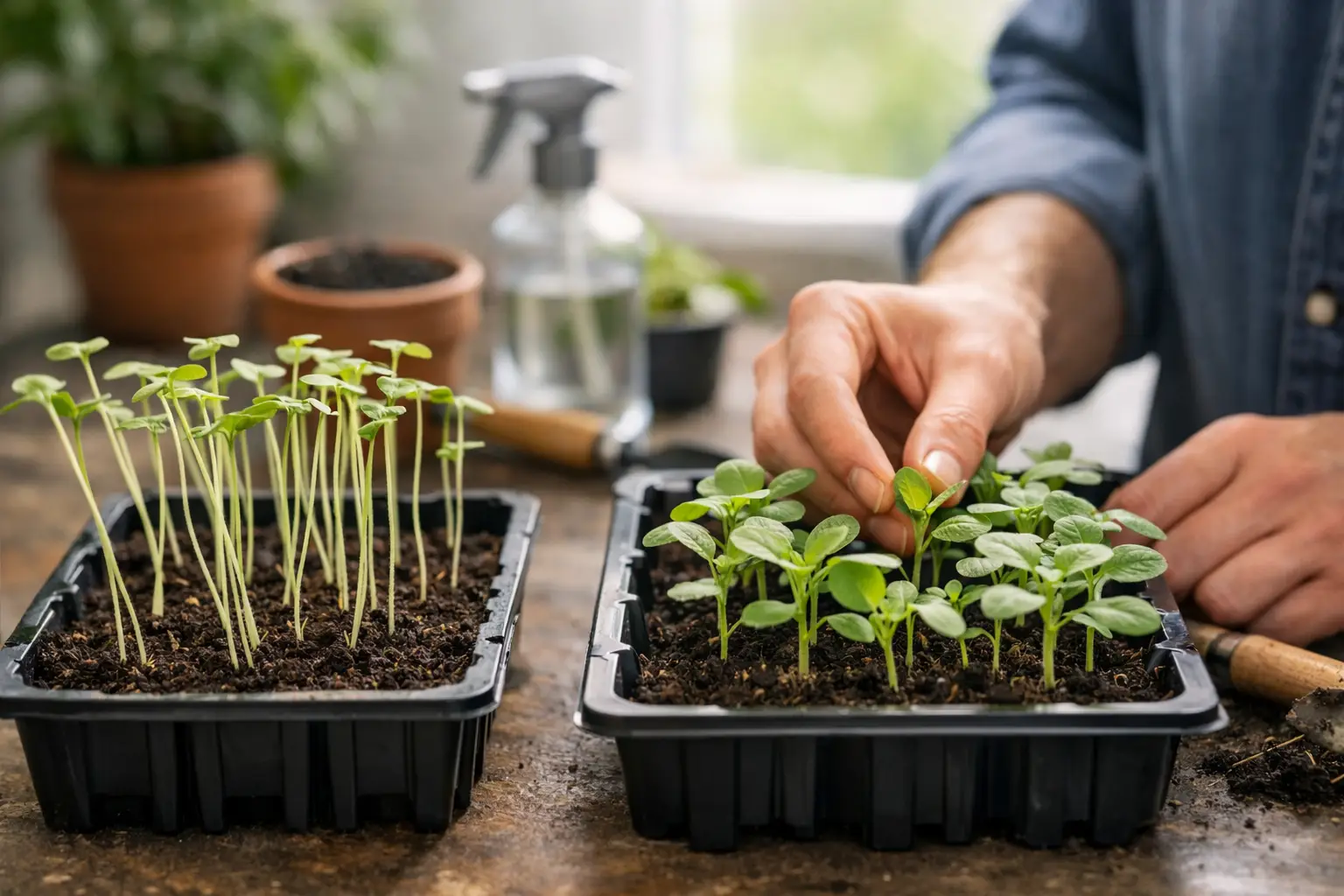
A leggy seedling has a long, narrow stem with relatively small leaves. It may lean toward a window, bend at the soil line, or look pale and fragile compared with its height.
Healthy seedlings are generally shorter and sturdier. Their stems thicken as they grow, their leaves develop good color, and they stand without appearing to need emotional or structural support.
Most leggy growth comes from too little light. A seedling senses that brighter conditions must exist somewhere above it, so it grows upward as quickly as possible.
That response makes sense outdoors, where a young plant may need to reach through fallen leaves or surrounding growth to find the sun.
Indoors, it can spend several days stretching toward a window that will never become bright enough.
Warmth can make the problem worse. Seeds often need warm conditions to germinate, but once they emerge, heat combined with weak light encourages fast, soft growth.
The seedling gains height without gaining strength.
Give Seedlings More Light Than You Think
A sunny windowsill looks bright to us.
To a tomato seedling in February, it may feel like a cloudy afternoon that never ends.
Window light can work for a small number of seedlings, particularly later in spring, but it comes from one direction and is often much weaker than outdoor sunlight. That is why seedlings bend toward the glass.
A basic LED or fluorescent grow light makes indoor seed starting far more predictable. It does not need to be elaborate. The goal is simply to put bright, even light directly above the plants.
For many ordinary home grow lights, keep the fixture about two to four inches above the leaves. Stronger lights may need more distance, so follow the instructions for your particular fixture.
Raise the light as the seedlings grow.
This matters more than many gardeners realize. A light that was perfectly positioned on Monday can be too far away by Friday after a tray of enthusiastic tomatoes has added two inches.
Give most seedlings about 14 to 16 hours of light each day. An inexpensive outlet timer can handle that job better than anyone’s memory.
Plants need darkness too, so leaving the light on around the clock will not make up for a weak fixture or poor placement.
If a window is your only option, use the brightest south-facing window you have and rotate the trays each day. The seedlings will still lean toward the light, but turning them helps keep that growth more balanced.
Just do not confuse rotating seedlings with solving the underlying problem. If every plant is reaching hard for the glass, it wants more light.
Do Not Start Every Seed Indoors
One of the easiest ways to end up with leggy seedlings is to start them much too early.
This usually begins innocently.
The seed packets arrive in January. The garden is frozen. We miss growing things. Starting a few tomatoes feels harmless.
Then April arrives, the soil is still cold, and those few tomatoes have become two-foot houseplants taking over the dining room.
Before sowing indoors, count backward from your average last frost date and consider how quickly your garden usually warms. Our guide to when to transplant seedlings without overthinking it can help you judge when the plants and the garden are both ready.
Tomatoes are usually started six to eight weeks before the last expected frost. Peppers and eggplants often benefit from a longer head start because they germinate and grow more slowly.
Many fast-growing plants do not need that much indoor attention.
Beans, cucumbers, squash, corn, peas, carrots, radishes, and many flowers are often easier to sow directly in the garden. Our guide to direct sowing vegetable seeds explains which plants are usually happier starting where they will grow.
Zinnias are a good example. They can be started indoors for earlier flowers, but they grow quickly and are also easy to sow outdoors once the soil is warm. Browse our zinnia seed collection if you want flowers that tend to reward a very simple approach.
Starting fewer plants indoors is not doing less gardening.
Sometimes it is doing smarter gardening.
Remove Extra Heat After Germination
Heat mats are wonderful for waking up warmth-loving seeds.
Peppers, eggplants, tomatoes, and some flowers germinate faster and more evenly with warm soil. But once the seedlings emerge, they may not need to remain on that heat mat.
Warmth tells a plant to grow.
Strong light gives it the energy to grow well.
When the room is warm but the light is weak, the seedling races upward without building much stem strength.
Once most of a tray has germinated, move it off the heat mat unless that particular plant needs continued warmth. Many common seedlings grow well with daytime temperatures around 65°F to 75°F and slightly cooler nights.
There is no need to make them cold. Just avoid keeping them in the warmest corner of the house, directly beside a heating vent, radiator, or appliance.
The goal is steady growth, not the fastest growth possible.
A seedling is not improved by reaching transplant size three weeks before it can go outside.
Give Seedlings Room to Grow
A tray full of tiny green sprouts is hard to resist.
When nearly every seed germinates, saving all of them can feel like the obvious thing to do. Soon, twelve seedlings are sharing a space meant for four, and every one is stretching upward to avoid being shaded by its neighbors.
Crowded seedlings compete for light, water, nutrients, and airflow.
Thin extras early or separate seedlings after they develop their first true leaves. True leaves appear after the smooth seed leaves, called cotyledons, and begin to resemble the plant’s mature foliage.
If several seedlings are growing in one cell, keep the strongest and snip the others at soil level with clean scissors. Pulling them can disturb the roots of the plant you want to save.
Yes, thinning can feel wasteful.
But keeping six weak seedlings is not more successful than keeping one strong one.
One reason we sell small, affordable packets is to make experimenting easier. Plant a few extras. Keep the best plants. Try another variety. You should not feel obligated to turn every seed that germinates into a full-grown plant.
Our Easy Vegetables to Grow are a good place to find forgiving choices while you build confidence with seed starting.
Water the Roots, Not the Entire Week
Leggy seedlings are usually caused by light and temperature, but poor watering can leave those already-thin stems even weaker.
Seed-starting mix should be moist, not permanently soaked.
Water when the surface begins to dry, then allow the extra water to drain away. Containers need drainage holes. Seedlings may be small, but their roots still need air.
Bottom watering works especially well for young plants. Place the cells or pots in a shallow tray of water and let the mix absorb moisture from below. Remove them once the soil is evenly moist rather than leaving the containers sitting in water all day.
This encourages roots to grow downward and keeps the stems and leaves drier.
Use a light seed-starting mix rather than soil dug from the garden. Garden soil may be wonderful outdoors but can become dense and waterlogged in small indoor cells.
Seedlings usually do not need fertilizer until they develop true leaves. After that, a diluted balanced fertilizer every week or two is generally enough.
More fertilizer will not correct weak light.
It may simply give you a taller leggy seedling.
Fix the light first.
Add a Little Breeze
Outdoor plants are rarely raised in perfectly still air.
They move in the breeze, recover, and gradually build stronger stems. Indoors, a small fan can provide a gentler version of that experience.
Set the fan on low and place it far enough away that the leaves flutter slightly. The seedlings should move, not look as though they are preparing for a hurricane.
Run it for a few hours each day once the seedlings are established.
Air movement also improves circulation around crowded trays and can help prevent some fungal problems.
No fan?
Gently brush your hand over the seedling tops once or twice a day.
It feels slightly ridiculous the first time.
Then it becomes one of those small gardening habits you do without thinking.
Just remember that a fan strengthens seedlings that already receive enough light. It cannot turn a dim windowsill into the sun.
Can Leggy Seedlings Be Saved?
Usually, yes.
Move the light closer. Reduce excessive heat. Thin crowded cells. Improve airflow. New growth should begin coming in shorter and sturdier even if the original stem remains stretched.
Tomatoes are particularly forgiving.
A leggy tomato seedling can be repotted more deeply, leaving the upper leaves above the soil. Tomatoes form new roots along buried portions of their stems. When it is time to transplant, you can also bury part of the stem vertically or lay it gently in a shallow trench with the leafy top turned upward.
What looked like a problem can become a larger root system.
That is one reason tomatoes are such satisfying plants for new gardeners. Browse our tomato seed collection if you want to try more than one variety. One may surprise you by thriving while another complains about everything.
Peppers, eggplants, herbs, brassicas, and most flowers should generally remain near their original planting depth. Give a stretched seedling better conditions and temporary support if needed, but do not assume every plant can be buried like a tomato.
If a seedling is extremely pale, thread-thin, or collapsing at the soil line, starting again may be the better choice.
That is not giving up.
Sometimes a fresh sowing catches up with a struggling seedling remarkably quickly. The new plant spends its energy growing while the old one spends weeks recovering.
Seeds are inexpensive.
Your time and growing season are more valuable.
Harden Off Sturdy Seedlings Before Planting
Even the strongest indoor seedlings have lived a protected life.
They have not experienced full sunlight, gusty wind, cold nights, or a sudden spring rain. Moving directly from a shelf under grow lights into the garden can shock an otherwise beautiful plant.
About seven to ten days before transplanting, begin hardening seedlings off.
Place them outdoors for an hour or two in a sheltered, shady spot. Bring them back inside, then gradually increase their time outdoors and exposure to morning sun over the following days.
Watch the plants rather than blindly following a schedule.
Bleached patches may mean too much sun too quickly. Wilting can mean wind, heat, or dry potting mix. A mild, cloudy week may make the process easy. A hot, windy week may require more patience.
By transplanting day, look for compact growth, healthy color, a sturdy stem, and roots that hold the potting mix together without circling into a tight knot.
The tallest seedling in the tray is not necessarily the best one.
Often, the short sturdy plant is the one quietly ready to take off.
Strong Seedlings Do Not Require a Perfect Setup
There is always a more elaborate way to start seeds.
More expensive lights. Better shelves. Specialized trays. Heat controls. Fans on timers. An indoor growing space that looks suspiciously like a laboratory.
Those things can be useful, especially if you start hundreds of plants.
But sturdy seedlings mostly need a few fundamentals:
Enough light.
Reasonable temperatures.
Room for their roots and leaves.
Moisture without constantly wet soil.
Enough time indoors, but not too much.
Pay attention to those things and you can grow excellent seedlings on a very ordinary shelf.
And if one tray stretches toward the window or a tomato becomes taller than planned, adjust what you can and keep going. Experienced gardeners grow leggy seedlings too. We start seeds too early, forget to raise a light, crowd too many plants into one tray, and occasionally try to keep every sprout because throwing out a perfectly alive seedling feels wrong.
Then we learn something.
That is the real value of starting seeds yourself. You are not just raising plants. You are learning to read them.
A leaning seedling asks for light.
A crowded tray asks for room.
A weak stem asks for a gentler pace and a little movement.
Listen early and most seedlings will recover.
And if one does not, plant another seed.
Something will grow.
Something always surprises you.
Happy gardening, The DollarHeirloom Team