Why Seedlings Fall Over—and How to Help Them Stand Again
A tray of seedlings can look full of promise on Monday.
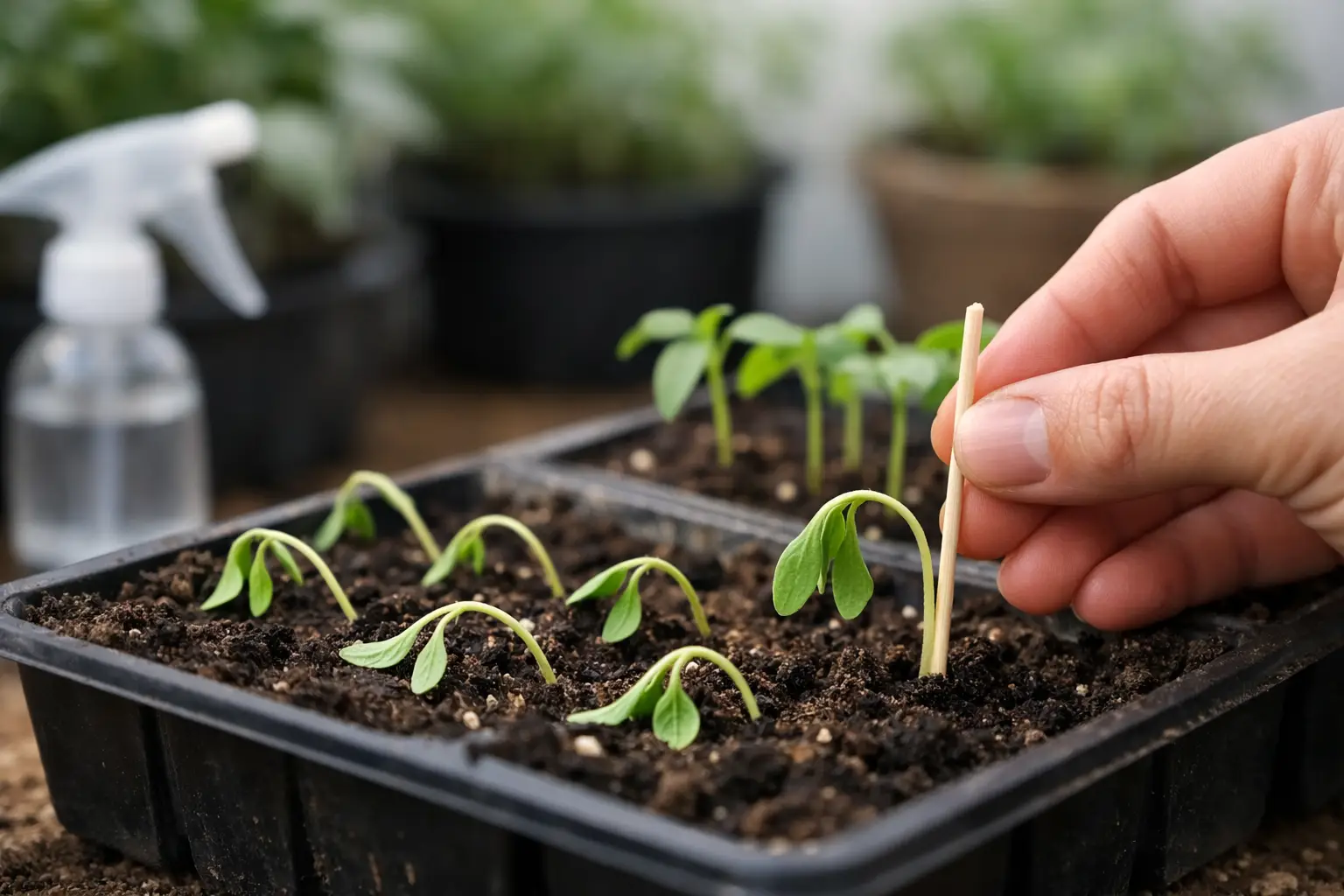
By Tuesday, half of them are leaning toward the window. One is lying across its neighbor. Another has collapsed at the soil line as though it quietly gave up during the night.
It is enough to make a gardener wonder what went wrong.
If you are trying to understand why seedlings fall over, begin with this reassuring truth: it is rarely bad luck, and it does not necessarily mean you received bad seeds.
Young plants simply respond quickly to their surroundings. Weak light, too much water, poor airflow, crowded conditions, disease, or a sudden move outdoors can turn a healthy-looking tray into a miniature emergency surprisingly fast.
The good news is that many floppy seedlings can recover.
And the ones that do not?
They still tell you something useful before the next seeds go into the soil.
Why Do Seedlings Fall Over?
Not every fallen seedling has the same problem.
Before adding water, fertilizer, a stake, and three other attempted remedies, take a close look at the plant.
Start with the stem.
- A long, thin stem leaning toward the window usually means insufficient light.
- A soft plant in wet, heavy soil may be struggling with too much water.
- A dark, pinched stem directly at the soil line points toward damping-off disease.
- A seedling wilting after its first afternoon outside may have sun, wind, or transplant shock.
- A plant that has outgrown its container may be rootbound, thirsty, or simply overdue for more room.
Then look at the soil.
Is it wet and heavy?
Bone dry?
Green with algae?
Pulling away from the side of the container?
The plant cannot explain what it needs, but its stem, leaves, roots, and soil provide a surprisingly detailed report.
Observe first.
Change one or two things.
Then give the seedling time to respond.
Weak Light Makes Seedlings Stretch
Insufficient light is the most common reason indoor seedlings become tall, thin, and unable to hold themselves upright.
Plants grow toward light.
When the light is weak or far away, a seedling stretches upward in search of more. That rapid growth creates height without enough strength. The stem becomes long and narrow, the leaves remain small, and eventually the plant begins to lean.
A sunny windowsill can look bright to us while still being inadequate for many vegetable seedlings.
Window light arrives from one direction, encouraging plants to bend toward the glass. Winter and early-spring sunlight may also be much weaker than it appears, particularly on cloudy days or through energy-efficient windows.
Tomatoes, peppers, eggplants, brassicas, and many flowers generally grow more reliably under a basic grow light.
Move the Light Closer
For many ordinary LED or fluorescent grow lights, keeping the fixture approximately 2 to 4 inches above the seedlings works well.
Your particular light may need a different distance, so check the manufacturer’s recommendations. A powerful fixture placed too close can damage leaves, while a weak fixture positioned several feet away may contribute very little.
Keep the light on for roughly 14 to 16 hours each day.
Then turn it off.
Plants benefit from a regular dark period, too. More light is helpful only up to a point; running the fixture around the clock is not a shortcut to stronger plants.
A simple outlet timer removes the daily guesswork.
Raise the fixture as the seedlings grow so it stays close to the upper leaves without touching them.
If the plants still lean, rotate the tray and consider whether the light covers the entire growing area evenly. Seedlings near the edges of a small fixture may stretch sideways even when the center plants remain compact.
Can Leggy Seedlings Recover?
A stretched stem will not shrink back to its original size.
Still, correcting the light can prevent additional stretching and help the plant produce stronger new growth.
Tomatoes are especially forgiving.
When you pot up or transplant a leggy tomato, you can bury part of its stem. Tomatoes can form roots along the buried section, turning an awkward seedling into a strongly anchored plant.
Remove any leaves that would be buried, place the plant deeper in its container or planting hole, and leave the healthy top growth above the soil.
Do not automatically use this trick with every crop.
Peppers, lettuce, basil, eggplants, brassicas, and most flowers are generally safer planted near the depth at which they were already growing. Some tolerate slightly deeper planting, but burying a tender stem too deeply can cause rot.
Better light is the first fix.
Deep planting is a useful tomato advantage, not a universal rescue plan.
Too Much Water Can Make Seedlings Wilt
A wilting plant looks thirsty.
That appearance can be misleading.
When seed-starting mix remains constantly saturated, the spaces that normally hold air fill with water. Roots need oxygen, and without it they cannot function properly.
The plant may droop even though water is everywhere.
A gardener sees the wilt, assumes the seedling is dry, adds more water, and unknowingly makes the problem worse.
Seedlings need consistent moisture.
They do not need to live in a swamp.
The mix should feel damp—something like a wrung-out sponge—rather than dripping wet.
Water the Soil, Not the Calendar
There is no single watering schedule that works for every tray.
A tiny cell under warm lights may dry quickly. A larger pot in a cool basement may stay moist for days. Humidity, airflow, plant size, container material, and the growing mix all affect how often water is needed.
Check the soil instead of watering automatically.
Touch the surface and lift the container. A pot becomes noticeably lighter as it dries. With practice, its weight becomes one of the fastest ways to judge moisture.
Make sure every container has drainage holes.
After bottom watering, remove the tray from the water and allow the excess to drain. Do not leave seedling cells standing in a full pan indefinitely.
If the soil is already wet and the plant is drooping, wait before adding more.
Roots may need air more urgently than they need another drink.
Try Bottom Watering
Bottom watering can be especially useful for young seedlings.
Place the containers in a shallow tray of water and allow the mix to absorb moisture through the drainage holes. Depending on the container and dryness of the mix, this may take 10 to 20 minutes.
Then remove the containers or empty the remaining water.
Bottom watering:
- Reduces splashing around tender stems
- Avoids displacing small seeds
- Encourages moisture to move through the root zone
- Keeps foliage somewhat drier
- Makes it harder to wash seedlings flat
It is still possible to overwater from below.
The objective is to moisten the mix, not keep the containers permanently submerged.
Heavy Soil Can Suffocate Young Roots
Ordinary garden soil works in the garden because it is surrounded by an enormous volume of soil, roots, insects, organic matter, and drainage pathways.
The same soil can behave very differently inside a two-inch cell.
It may compact, drain slowly, and remain wet around delicate roots. It can also carry weed seeds or organisms that cause seedling disease.
Use a light, fine-textured seed-starting mix for germination.
Once seedlings develop true leaves and need larger containers, a quality potting mix is usually appropriate. Avoid mixes that feel dense, remain waterlogged, or form a hard surface crust.
The container does not need to be fancy.
The roots do need water, air, and somewhere to grow.
Damping-Off Can Cause Sudden Collapse
Damping-off is one of the more frustrating reasons seedlings fall over.
A plant can appear healthy one day and collapse the next. The lower stem may look brown, gray, water-soaked, or pinched into a thin thread directly where it meets the soil.
Several fungi and fungus-like organisms can cause damping-off. They thrive under conditions that are often found in indoor seed trays:
- Constantly wet growing mix
- Cool temperatures
- Poor airflow
- Crowded seedlings
- Dirty containers
- Decaying plant material
Unfortunately, a seedling that has already collapsed from damping-off is unlikely to recover.
Remove it promptly along with loose, decaying material nearby.
Do not blame the seed.
Do not blame yourself.
Damping-off has surprised experienced gardeners who have been starting seeds for decades. The useful response is to improve the conditions around the remaining seedlings and begin again if necessary.
A packet gives you more than one opportunity.
How to Reduce Damping-Off
You cannot remove every possible organism from a seed-starting area, nor do you need to.
You can make the conditions much less welcoming to disease.
- Use clean containers.
- Start with fresh seed-starting mix.
- Make sure containers drain freely.
- Avoid keeping the surface constantly soaked.
- Remove humidity covers after seedlings emerge.
- Provide gentle airflow.
- Thin crowded cells.
- Give seedlings strong light.
- Remove dead leaves and collapsed plants.
A small fan placed near the growing area can help.
The seedlings should flutter slightly, not bend hard in one direction. Gentle air movement helps prevent stagnant humidity and encourages stems to become stronger.
Think breeze.
Not wind tunnel.
Crowded Seedlings Compete and Collapse
A cell containing six healthy seedlings can feel like excellent germination.
Soon, those six plants begin competing for the same light, root space, moisture, and air.
They shade one another.
They stretch.
Moisture lingers around their stems.
Roots become tangled.
It can be difficult to remove a healthy seedling, particularly when you spent a week waiting for it to appear. But saving every sprout can leave you with several weak plants instead of one strong one.
Thin crowded cells early.
Use clean, small scissors to snip unwanted seedlings at the soil line. Pulling them may disturb the roots of the plant you intend to keep.
Some crops, including lettuce, tomatoes, and many flowers, can be separated while young. Even then, a little root damage is possible. When the seed is affordable, thinning to the strongest plant is often simpler and more reliable than attempting a rescue operation on every sprout.
Strong seedlings need room.
Giving them that room is not wasteful.
Heat Can Encourage Weak Growth
Warmth helps many seeds germinate.
After germination, however, excessive warmth can encourage fast, soft growth—especially when the light is inadequate.
This often happens with heat mats.
A gardener places peppers or tomatoes on a heat mat, waits eagerly for them to sprout, and leaves the tray there for several more weeks. The seedlings continue growing in warm conditions, stretching more quickly than their available light can support.
Once most seeds have emerged, remove the tray from the heat mat unless the crop or growing space genuinely needs the additional warmth.
Many seedlings grow sturdier in moderate daytime temperatures with slightly cooler nights.
The goal is not to make them cold.
It is to keep warmth and light in balance.
If the plant is growing rapidly upward, it must receive enough light to build the stem and leaves needed to support that growth.
Sudden Outdoor Conditions Can Make Seedlings Flop
Indoor seedlings have lived remarkably sheltered lives.
They have not experienced direct midday sun, changing temperatures, rain, drying wind, or a bird landing beside them with suspicious intentions.
Taking a seedling from a protected shelf and placing it directly in full afternoon sun is a little like asking someone to run a marathon after spending the winter on the couch.
Even a strong indoor seedling can wilt, bleach, or fall over.
This does not necessarily mean it is dying.
It may simply be overwhelmed.
The gradual transition to outdoor conditions is called hardening off.
Harden Seedlings Off Gradually
Begin approximately seven to ten days before transplanting.
On the first day, place seedlings outdoors for an hour or two in a protected, shady location. Bring them inside afterward.
Gradually increase:
- Their time outdoors
- Exposure to morning sun
- Gentle wind
- Normal temperature changes
Avoid beginning with intense afternoon sun or a cold, windy day.
Watch the plants rather than following the schedule blindly. If leaves wilt badly or develop white, bleached patches, slow down and reduce exposure.
Warm-season plants such as tomatoes, peppers, basil, cucumbers, squash, and zinnias dislike frost, cold soil, and chilly nights.
Cool-season seedlings—including broccoli, kale, cabbage, lettuce, and many hardy flowers—can tolerate cooler weather. They still appreciate a gradual introduction to sun and wind.
Our guide to when to transplant seedlings without setbacks explains how to consider the plant, soil, nighttime temperatures, and forecast together.
The goal is not to move a seedling outdoors on the earliest possible date.
The goal is to give it a fair beginning.
Transplant Carefully
Water seedlings a few hours before transplanting so the root ball is moist and more likely to remain together.
Prepare the planting hole before removing the plant from its container.
Handle the seedling by a leaf or the root ball rather than pinching its stem. A plant can replace a damaged leaf. A crushed main stem is much more serious.
Plant during late afternoon or on a calm, cloudy day when possible. This gives the seedling time to settle before facing strong sun.
Water after planting to settle the soil around the roots.
A little temporary wilting can be normal. The plant should begin recovering by the next morning or as conditions become milder.
If it remains severely wilted, check for:
- Dry soil around the root ball
- Waterlogged soil
- Broken roots or stems
- Excessive sun
- Cold temperatures
- Wind damage
- An air pocket around the roots
Temporary shade can help a stressed transplant recover during unexpectedly hot weather.
A Simple Rescue Plan for Floppy Seedlings
When a seedling starts leaning or wilting, resist the urge to change everything at once.
Repotting, fertilizing, watering, moving, staking, and spraying the plant on the same day can add more stress and make it impossible to tell which correction helped.
Use the symptoms to choose the most likely response.
If the stem is long, thin, and leaning
- Move the plant under stronger light.
- Position the light closer.
- Rotate the tray if light comes from one direction.
- Add gentle airflow.
- Provide temporary support if necessary.
If the soil is wet and the plant is drooping
- Stop watering temporarily.
- Check that drainage holes are open.
- Empty standing water from the tray.
- Improve airflow.
- Consider a lighter growing mix for the next batch.
If the stem is dark and pinched at soil level
- Remove the affected seedling.
- Remove dead plant material.
- Reduce excess moisture.
- Improve airflow and spacing.
- Use fresh mix and clean containers when sowing again.
If the seedling wilts outdoors
- Move it into shade.
- Check soil moisture.
- Protect it from strong wind.
- Shorten its outdoor exposure.
- Continue hardening off more gradually.
If roots fill the entire container
- Move the plant into a slightly larger pot.
- Loosen tightly circling roots gently.
- Provide good light after repotting.
- Do not jump immediately to an oversized container that will remain wet too long.
Make one or two targeted corrections.
Then observe.
Plants need time to answer.
Do Not Try to Fertilize Away the Problem
Fertilizer cannot correct weak light, soggy soil, disease, or cold temperatures.
Heavy feeding may make matters worse by damaging delicate roots or encouraging more rapid, soft growth.
Seeds contain the stored energy they need to germinate and begin growing.
Once seedlings develop their first true leaves, a diluted, balanced fertilizer can be useful if they will remain in containers for several weeks. Follow the product directions and begin lightly.
A pale plant may need nutrients.
It may also have cold roots, excess water, damaged roots, or inadequate light.
Fix the growing conditions before assuming the seedling is hungry.
More fertilizer is not more care.
Sometimes care means leaving the plant alone for a day.
Starting Too Early Can Create Floppy Seedlings
Starting seeds early feels productive.
Starting them too early creates a different problem.
Tomatoes and peppers planted months before outdoor conditions are ready may outgrow their cells, crowd the lights, become rootbound, and stretch while waiting for spring.
A healthy six-week-old seedling can be much easier to transplant than a twelve-week-old plant that has spent the last month living sideways.
Check your average last frost date and count backward using the indoor-starting recommendation for the crop.
Remember that the frost date is only a planning guide. Soil temperature and nighttime conditions still matter.
Many plants do not need to be started indoors at all.
Beans, peas, squash, cucumbers, corn, sunflowers, radishes, carrots, and many other crops often grow beautifully when planted directly outside.
Our guide to direct sowing vegetable seeds can help you decide which plants can skip the indoor tray entirely.
Fewer seedlings under the lights means more space and attention for the crops that genuinely need the head start.
Give the Next Tray a Better Beginning
Strong seedlings usually come from a remarkably simple routine:
- Fresh, light seed-starting mix
- Clean containers with drainage holes
- Consistent moisture
- Suitable warmth during germination
- Strong light immediately after emergence
- Gentle airflow
- Enough room between plants
- Sensible timing
- A gradual move outdoors
You do not need a greenhouse or an elaborate growing system.
A basic light, an inexpensive timer, clean containers, and a few minutes of attention each day can raise remarkably sturdy plants.
If you are just beginning, How Seeds Wake Up: A Beginner’s Guide to Germination walks through the entire process from dry seed to young plant.
And begin with something that wants to grow.
Our Easy-to-Grow Vegetable, Flower, and Herb Garden was created around approachable varieties and the kind of early victories that build confidence.
Confidence matters.
A gardener who successfully grows one tray is much more likely to plant another.
Every Tray Teaches You Something
Experienced gardeners still grow floppy seedlings.
We leave a tray on the heat mat too long.
We misjudge how quickly a tiny pot will dry.
We crowd three tomato plants under a light meant for one.
We confidently place hardened seedlings outside—and discover that the afternoon wind had plans of its own.
The difference is not that experienced gardeners avoid every mistake.
They recognize the clues sooner.
They move the light closer.
They put down the watering can.
They plant another seed.
That is the DH part of growing.
A collapsed seedling is disappointing, but it is not a verdict on the garden ahead. It is one small result from one set of conditions.
Change something.
Sow again.
Watch what happens.
One day, you will look across a tray of short, sturdy seedlings standing under the light and realize you know exactly what they need.
Not because every seedling survived.
Because you kept planting until enough of them did.
Happy gardening, The DollarHeirloom Team