Heirloom or Hybrid? Choose the Plant, Not the Label
A tomato packet can tell you a surprising amount about the garden ahead.
One variety promises richly flavored fruit, a story reaching back generations, and seeds you can save for next year. Another offers a compact plant, earlier tomatoes, or resistance to a disease that has ruined your harvest before.
Which is better?
That depends entirely on what you need the plant to do.
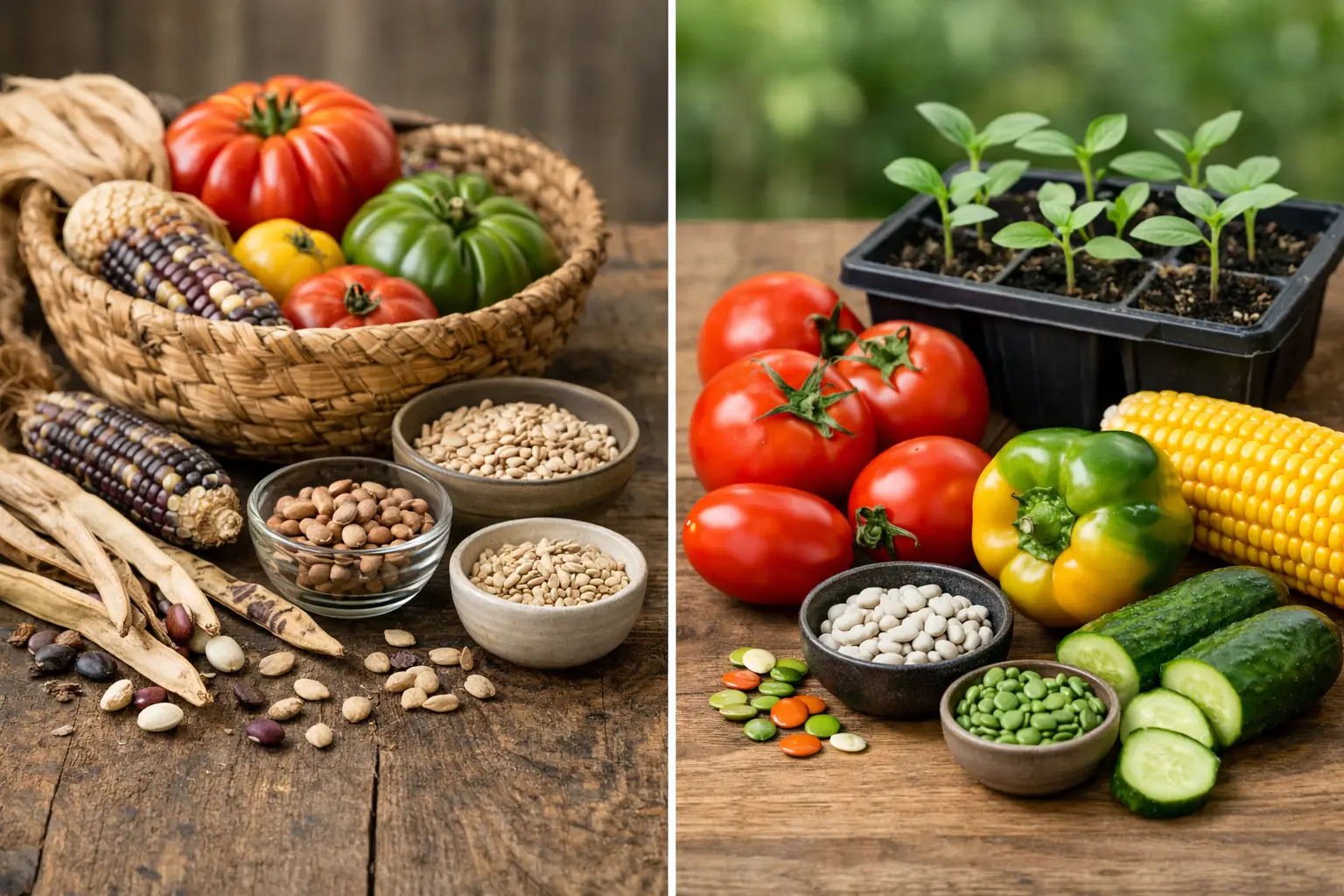
The heirloom-versus-hybrid seed conversation sometimes sounds like gardeners are being asked to choose sides. Heirlooms are presented as old, flavorful, and virtuous. Hybrids are described as modern, uniform, and suspiciously perfect.
Real gardens are less interested in labels.
A wonderful heirloom can struggle in the wrong climate. A carefully chosen hybrid can solve a problem that has frustrated you for years. The most useful choice is the variety that fits your space, season, goals, and appetite for experimenting.
You do not need to declare allegiance.
You need to grow plants you are excited to see succeed.
The Short Version
An heirloom seed is generally an older, open-pollinated variety that has been preserved and passed down over many years.
If an heirloom plant is pollinated by the same variety and does not cross with something compatible nearby, its saved seeds should produce plants much like the parent.
A hybrid seed is created by deliberately crossing two different parent lines of the same species. The first generation, usually labeled F1, is bred to combine particular traits.
Those traits might include:
- Earlier maturity
- Disease resistance
- Compact growth
- Uniform fruit
- Higher yield
- A concentrated harvest
- Better performance under particular conditions
Hybrid does not mean genetically modified.
Hybridization is controlled pollination. Plant breeders choose the parents and make the cross deliberately. Genetic modification is a different process.
Both heirloom and hybrid seeds can be non-GMO.
If you want the fuller explanation of how these categories fit together, read our guide to open-pollinated versus hybrid seeds.
For this article, we are interested in the more practical question:
What should you plant?
Start With the Problem You Are Trying to Solve
Seed shopping often begins with pictures.
That is understandable.
A deeply ribbed purple tomato is more exciting than a sentence about disease resistance. A striped bean can find its way into the cart before we have any idea whether it climbs twelve feet or matures before frost.
There is nothing wrong with buying a seed because it looks interesting.
Curiosity belongs in a garden.
But before choosing between an heirloom and a hybrid, think about what has been difficult in your garden.
Did tomato disease ruin the plants last summer?
Is your growing season short?
Are you planting in containers?
Do you want to save seeds?
Does the whole family want tomatoes, or are you the only person eating them?
Are you trying to harvest everything at once for canning, or would you prefer a few vegetables each week?
Once you know the job, the label becomes more useful.
Tomatoes: Flavor, Disease, and the Sandwich Test
Tomatoes are where the heirloom-versus-hybrid debate becomes most dramatic.
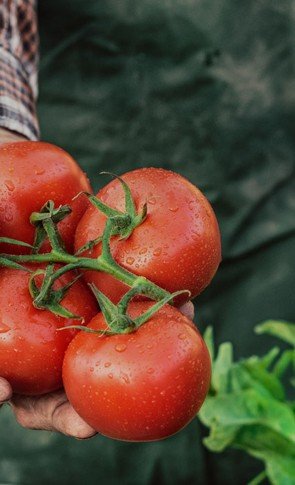
Heirloom tomatoes are famous for flavor, unusual colors, and varieties that look as though they each developed a personality.
Some are sweet.
Some are sharply acidic.
Some are striped, ribbed, orange, purple, green when ripe, or large enough to make one slice cover the bread.
A ripe heirloom tomato, still warm from the garden, can justify months of staking, watering, and checking the leaves for hornworms.
But heirloom does not automatically mean delicious.
Flavor depends on the variety, ripeness, soil, weather, and the person eating it. One gardener wants sweetness. Another wants enough acid to make a tomato announce itself through mayonnaise and bacon.
Hybrids can taste excellent too.
They may also offer earlier maturity, compact growth, crack resistance, or protection against common diseases. If fusarium wilt, verticillium wilt, or another recurring disease takes down your tomatoes every summer, a resistant hybrid may be the practical choice.
The easiest solution is not to argue about it.
Grow both.
Plant one heirloom you want to taste and one resistant variety you trust to produce. Compare them in your own soil.
Our guide to choosing and growing tomato seeds can help you match cherry, slicing, paste, determinate, and indeterminate tomatoes to the garden you actually have.
The winner is not the one with the most impressive label.
It is the tomato you reach for first.
Cucumbers and Squash: When Resistance Matters
Cucumbers and squash can grow beautifully for weeks and then appear to collapse overnight.
Powdery mildew arrives.
Bacterial wilt appears.
Squash vine borers move in without paying rent.
By August, the lush plant from June may look like it has received terrible news.
If the same disease regularly ends your cucumber or squash season, a hybrid with specific resistance may be worth trying.
Resistance does not mean immunity. The plant may still become infected, especially under heavy disease pressure. But it may stay healthier longer and produce more before the problem takes over.
An heirloom cucumber can also perform beautifully, especially if it has a history of doing well in conditions similar to yours.
This is where garden notes become valuable.
Write down:
- The variety
- When it was planted
- When it began producing
- Which disease appeared
- How long the plant continued producing
- Whether you liked eating it
Next year, you are no longer choosing from a catalog description.
You are choosing from evidence gathered in your own garden.
Beans and Peas: An Easy Place to Love Heirlooms
Beans and peas are among the easiest crops for new gardeners to grow and save.
They are largely self-pollinating, so varieties are less likely to cross than squash, corn, or cucumbers. Let the pods mature and dry on healthy plants, collect the seeds, and store them somewhere cool and dry.
Next year, plant them again.
Beans also offer the kind of variety that makes heirloom gardening fun.
Green beans.
Purple beans that turn green in the pot.
Yellow wax beans.
Flat beans.
Speckled beans.
Pole beans that climb far beyond the trellis you confidently believed would be tall enough.
A hybrid bean may be useful when you want uniform harvests, disease resistance, or plants developed for a particular growing system.
But for a gardener interested in seed saving, beans are hard to beat.
They grow quickly, produce generously, and make the connection between one season and the next easy to see.
Lettuce and Greens: Variety May Matter More Than the Label
When choosing lettuce, spinach, kale, chard, and other greens, your season may matter more than whether the variety is heirloom or hybrid.
Some lettuces tolerate heat longer before bolting.
Others thrive in cold spring soil.
One spinach may perform beautifully in fall but struggle during a warm spring. A kale variety may handle winter weather that finishes another.
Look first at:
- Heat tolerance
- Cold tolerance
- Days to maturity
- Mature size
- Leaf texture
- Whether the variety can be harvested repeatedly
An open-pollinated lettuce is easy to grow for seed if you allow it to bolt and flower, although lettuce seeds are small and require a little patience to collect.
A hybrid may offer uniformity, slower bolting, or resistance to a particular disease.
Neither choice matters if you plant spinach during the hottest part of summer and ask it to be cheerful.
The season gets a vote too.
Peppers and Eggplants: Let Your Climate Decide
Peppers and eggplants love warmth and take time.
In a long, hot season, gardeners can experiment with large, unusual, or slower heirloom varieties and still expect a harvest.
In a northern garden, days to maturity become more important.
A beautiful long-season pepper that ripens in October may spend September covered with green fruit while frost approaches. An earlier hybrid or open-pollinated variety may give you a much better chance of harvesting ripe peppers.
Container gardeners should also pay attention to plant size.
A compact hybrid developed for patios may fit a small space better than a sprawling heirloom. But plenty of smaller open-pollinated peppers and eggplants work well in containers too.
Choose for the growing season and space first.
Then decide which fruit sounds worth waiting for.
Flowers: Uniform Display or Cheerful Surprise?
The same choice appears in flowers.
A hybrid flower may be bred for a particular height, bloom size, color, or uniform growing habit. That can be useful when you want a neat border, a planned color palette, or stems of similar length for bouquets.
Open-pollinated flowers often bring more variation.
One zinnia may be coral.
Another opens deep red.
A third produces a shade that does not seem to have a proper name.
That unpredictability can make a flower bed feel alive.
Open-pollinated flowers also allow you to save seeds, although varieties can cross when pollinators move between compatible plants. The saved flowers may not look exactly like their parents.
Sometimes that is the point.
If you want dependable flowers that tolerate beginner mistakes, browse our Easy Flowers to Grow. They offer color, pollinator activity, and the satisfying experience of watching a small packet become far more flowers than expected.
A garden does not need every bloom to match.
It needs enough life to make you stop and look.
When Uniformity Is Actually Useful
Uniformity is sometimes discussed as though it were a bland commercial concern.
It can be genuinely helpful.
If you want cucumbers of similar size for pickling, uniformity makes the process easier.
If you are growing cabbage for one large batch of sauerkraut, heads maturing together may be exactly what you want.
If you sell produce, donate to a food pantry, or preserve large quantities, a concentrated harvest can save time.
For an ordinary home garden, however, uniform maturity can create its own problem.
Twenty cabbages ready together are useful if you planned for twenty cabbages.
Otherwise, they become a neighborhood outreach program.
A less uniform heirloom variety may spread the harvest. One tomato ripens today. Three more are ready over the weekend. Beans arrive steadily instead of all at once.
Neither pattern is better.
The question is whether you want a harvest or an appointment.
If You Want to Save Seeds, Heirlooms Make It Easier
Seed saving is where heirlooms and other open-pollinated varieties have the clearest advantage.
Save seed from a healthy open-pollinated plant, prevent unwanted crossing, and the next generation should resemble the original.
Seeds saved from an F1 hybrid may grow, but the offspring will not reliably match the parent. Traits can separate into many combinations.
That does not make hybrid seeds sterile or dangerous.
It makes the next generation unpredictable.
For a curious gardener, growing saved hybrid seed can be an interesting experiment. You may get something excellent, ordinary, or completely odd.
For a gardener who wants the same tomato next year, it is not the dependable route.
Begin seed saving with beans, peas, lettuce, or tomatoes. Choose one variety, save from healthy productive plants, and label everything clearly.
Do not begin by trying to preserve the genetics of the entire garden.
One successful jar of saved beans will teach you more than twenty envelopes labeled “probably squash.”
Beginners Should Grow Both
A first garden does not need a philosophy.
It needs a few things that grow.
Choose reliable crops that fit the season and space. Add one or two varieties that make you curious enough to check the garden every morning.
You might grow:
- An heirloom cherry tomato for flavor and seed saving
- A resistant slicing tomato for dependable sandwiches
- An open-pollinated bean because it is easy and productive
- A compact hybrid cucumber for a patio container
- An heirloom lettuce that can be saved for next spring
- A few open-pollinated flowers that pollinators can discover
There is no prize for filling the entire garden with only one type of seed.
There is a great deal to learn from comparison.
Our Easy Vegetables to Grow are a good starting point for crops that germinate readily and forgive some beginner mistakes.
Start with a few reasonable odds.
Then add a surprise.
A Simple Way to Choose
Before buying a variety, ask:
Do I want to save its seeds?
Choose an heirloom or another open-pollinated variety.
Has a specific disease been a recurring problem?
Look for varieties with resistance to that disease, whether hybrid or open-pollinated.
Is my season short?
Prioritize days to maturity. An early hybrid may help, but many open-pollinated varieties mature quickly too.
Am I growing in containers?
Look at mature plant size. Words such as compact, dwarf, bush, patio, or determinate may matter more than heirloom or hybrid.
Do I need everything ready together?
A uniform hybrid may be helpful for preserving, selling, or one large harvest.
Do I want flavor, history, or something unusual?
Heirlooms offer a tremendous field to explore.
Do I simply want to try it?
That is also a valid reason.
Not every seed needs a strategic justification.
Sometimes a purple carrot is enough of a plan.
Grow More Than One Answer
A catalog can describe a variety.
Only your garden can test it.
A plant that thrives for a gardener across town may struggle in your shaded bed, heavy clay, windy balcony, or unusually wet summer.
Keep a few notes.
Nothing elaborate.
Write down the variety, planting date, first harvest, disease problems, flavor, and whether you would grow it again.
After a season or two, those notes become more useful than broad claims about heirlooms or hybrids.
You may discover that an old tomato loves your humid summers.
You may find a hybrid cucumber that keeps producing weeks after the others fade.
You may grow two beans that seem identical on paper and strongly prefer one for reasons you cannot quite explain.
That is why we believe gardeners should plant their favorites and then plant some surprises.
One variety gives you a crop.
Two varieties give you a comparison.
Three may give you a story.
Choose the Plant, Not the Label
At DollarHeirloom, we focus on heirloom and open-pollinated seeds because we love their flavor, history, variety, and the freedom to save them.
We also believe gardeners should be able to experiment without making every new variety a serious financial decision.
That does not require pretending every heirloom is superior or that hybrids have no place in a garden.
A seed label is information.
It is not an instruction about the kind of gardener you must become.
Grow the dependable tomato.
Grow the old tomato with the strange name.
Plant the disease-resistant cucumber where cucumbers have struggled before.
Save seeds from the bean that produced all summer.
Leave a little room for something you chose mostly because it looked interesting.
Some varieties will become permanent favorites.
Some will never be planted again.
And every so often, the seed you knew the least about will grow into the plant you talk about all winter.
That is not poor planning.
That is gardening doing what it does best.
Happy gardening, The DollarHeirloom Team