Flat-Rate Seed Shipping: How to Get More Garden From One Order
A $1 seed packet can grow dozens of tomato plants, a row of beans, more lettuce than you expected, or enough zinnias to make the whole garden feel cheerful.
Then shipping enters the conversation.
When one or two small packets are sitting in the cart, a $3.99 delivery charge can feel surprisingly large. Add twenty packets, though, and that same charge becomes twenty cents per variety.
That is the idea behind flat-rate seed shipping. The shipping cost stays predictable while the garden gets more interesting.
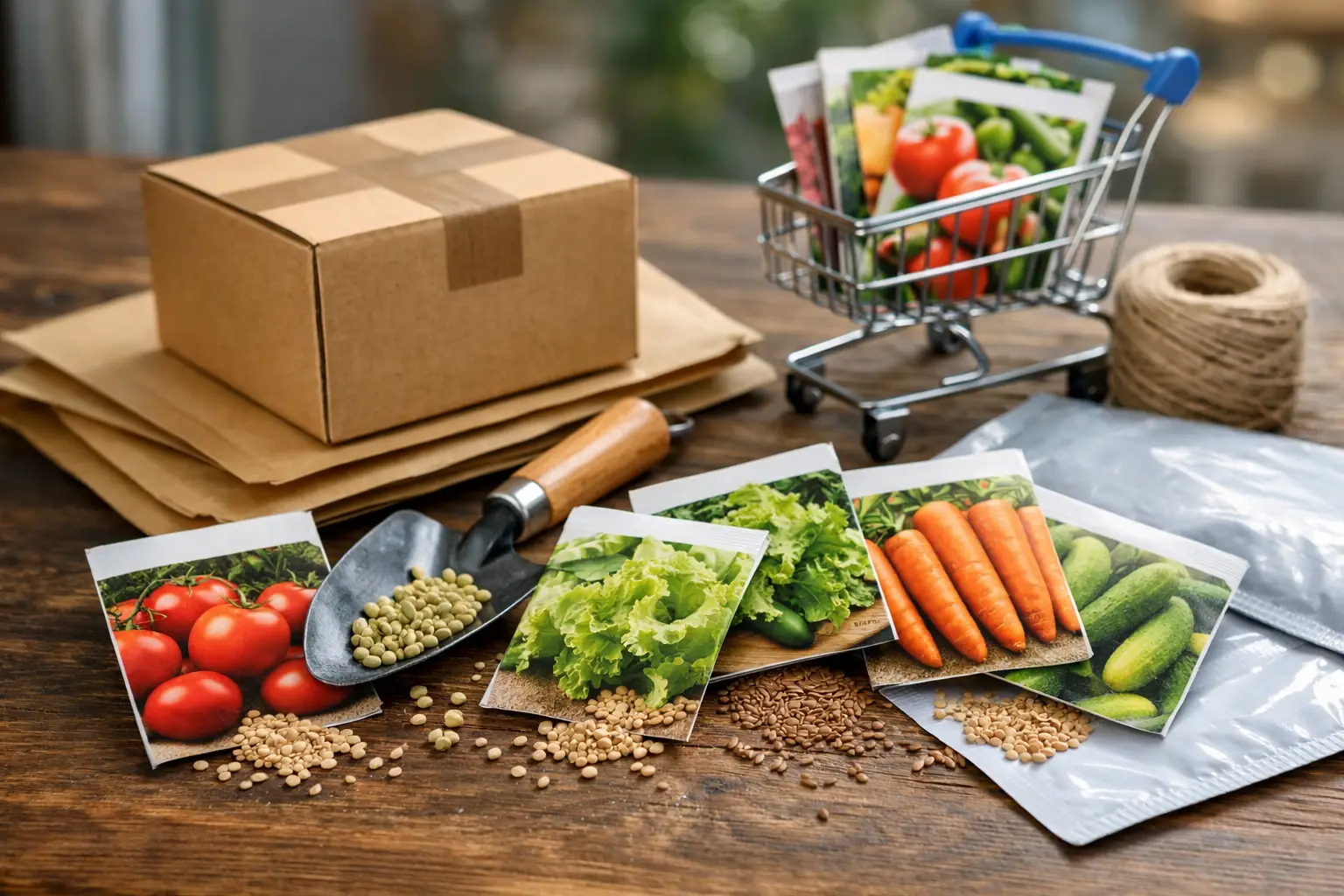
At DollarHeirloom, shipping is a flat $3.99. Whether you order a few packets or enough vegetables, herbs, and flowers to fill a garden, the shipping charge remains the same.
That does not mean you should add seeds you will never plant just to improve the math.
It means one thoughtful order can carry a surprising amount of possibility to your mailbox.
Why Does It Cost $3.99 to Ship Something So Small?
Seeds are light.
Shipping them still involves more than the weight of the seeds.
Every order needs to be gathered, checked, packed, labeled, and handed to a carrier. The envelope has to protect the packets from tearing, moisture, and the other indignities that mail occasionally experiences on its way across the country.
A single packet requires almost the same trip to your mailbox as twenty packets.
Flat-rate shipping keeps that cost simple. You know what delivery will cost before you start building the order, and adding another variety does not cause the shipping charge to creep upward.
Our current shipping rate is $3.99, and orders typically leave the next business day. You can find the current details on our shipping FAQ.
Predictable does not always mean cheapest for every possible order.
If you need one packet of radishes tomorrow and the local garden center has the variety you want, buying it there may make perfect sense.
But if you are planning a garden rather than replacing one missing packet, flat-rate shipping can work remarkably well.
One Packet and Twenty Packets Take the Same Ride
Imagine ordering three $1 seed packets.
The seeds cost $3. Shipping costs $3.99.
That can feel backward.
Now imagine ordering twenty packets for a vegetable, herb, and flower garden.
The seeds cost about $20. Shipping is still $3.99.
The delivery cost has not disappeared, but it is now spread across twenty varieties instead of three. More of what you spend is going toward the things you will actually plant.
This is where affordable packets and flat-rate shipping begin to work together.
You can choose two tomato varieties instead of betting the entire summer on one. Add lettuce and radishes for spring. Beans and cucumbers for summer. Basil for the kitchen. Zinnias and marigolds because a vegetable garden should not have to choose between being useful and being beautiful.
The envelope barely notices the difference.
Your garden will.
Start With the Garden, Not the Shopping Cart
There is a small danger in any flat-rate offer.
Once the shipping charge is fixed, adding another packet can begin to feel free.
It is not free.
It is still another plant that needs space, light, water, and some part of your attention.
Before ordering, take a quick inventory of the garden you actually have:
- How many beds, containers, or rows are available?
- Which spaces receive enough direct sun?
- What season are you planting for?
- What does your family actually eat?
- Which plants need room to spread or climb?
- What would be fun to try even if it produces nothing but a good story?
The last question matters too.
A garden should not be planned only around efficiency. There should be room for the striped tomato, the purple bean, the lemon basil, or the flower you added because the name made you curious.
But there is a difference between leaving room for surprises and filling a cart with thirty varieties that all need the same sunny four feet of garden.
Build the garden first.
Then build the order around it.
Plant Your Favorites, Then Add a Few Surprises
Every seed order should contain a few things you already trust.
Maybe you always grow green beans because they are productive and your family eats them. Maybe summer does not feel official until the first tomato ripens. Maybe basil has earned a permanent place beside the kitchen door.
Start there.
Then add something unfamiliar.
Try a different tomato next to your usual favorite. Grow a yellow bean beside the green one. Add an herb you have never cooked with or a flower you would not normally choose.
That is the thinking behind planting more than one variety. It makes the garden more interesting, but it also spreads the risk.
One lettuce may handle an early warm spell better.
One tomato may shrug off the humidity while another struggles.
One flower may become the favorite of every bee in the neighborhood.
We do not always know what will succeed until we grow it.
That is why trying another variety should not feel like a major financial decision.
A First Garden Needs More Variety Than You Might Expect
A first-time gardener may think of “a vegetable garden” as tomatoes, cucumbers, and perhaps zucchini.
That is a beginning.
But a satisfying garden usually has something happening across more than one part of the season.
Lettuce, spinach, peas, onions, and radishes can get things started during cool spring weather. Tomatoes, peppers, beans, cucumbers, squash, and basil take over when summer arrives. Kale, lettuce, radishes, and other cool-season crops can return for fall.
Then there are flowers.
Zinnias, marigolds, nasturtiums, calendula, cosmos, and other easy flowers add color, attract pollinators, and give you something cheerful to cut when the zucchini is being uncooperative.
A dozen or more packets does not necessarily mean a huge garden. It can mean a small garden that changes through the season.
Our guide to seed collections for beginners explains how to choose a useful mix without falling into the “plant everything” trap.
If you would rather start with one collection already built around reliable crops, our Easy-to-Grow Vegetable, Flower, and Herb Garden combines food, herbs, flowers, and pollinator-friendly plants in one box.
Start simple.
Grow something real.
When a Small Seed Order Still Makes Sense
Shipping math should not decide everything.
Sometimes you need one variety.
Perhaps the bean seeds did not germinate. A rabbit found the lettuce before you did. A late frost ended the basil experiment. Or you discovered an empty container and decided it clearly needs flowers.
If that one packet gets planted and enjoyed, the order may still be worth it.
Value is not determined only by dividing the shipping charge by the number of packets.
A $1 packet of zinnias can produce flowers for months. One packet of basil can supply more fresh leaves than most families need. A packet of beans can become several meals and enough gardening confidence to try again next year.
Still, if the need is not urgent, use the wishlist.
Save the variety for your next planned order. Add the seeds you will need for the coming season. Ask whether a friend, neighbor, or family member needs anything too.
A little patience can turn an awkward one-packet order into a much better garden plan.
Share the Shipping and the Experiment
Gardeners are good at sharing things.
Tomatoes.
Zucchini, especially after the sixth one.
Saved seeds.
Transplants that no longer fit under the grow lights.
Advice that may or may not have been requested.
A shared seed order fits naturally into that tradition.
If you only need a few packets, ask another gardener whether they are planning an order. A neighbor may need flowers. A friend may be starting herbs. Someone at the community garden may have spent the winter making an extremely ambitious tomato list.
Combine the order and decide how to divide the $3.99 shipping charge.
You can also divide some seed packets if they contain more than either gardener needs. Just label everything before separating the seeds.
A small envelope of unidentified seeds may feel mysterious in February.
By May, it feels less charming.
Order for More Than One Season
A seed order does not have to be planted all at once.
Many vegetable, herb, and flower seeds remain viable for several years when stored properly. That means one order can include spring crops, summer vegetables, fall greens, and a few varieties for next year.
Sort the packets by planting season when they arrive:
- Cool-season vegetables for early spring or fall
- Warm-season vegetables for after frost
- Herbs
- Flowers
- Seeds to start indoors
- Seeds to sow directly in the garden
This prevents the warm-season crops from distracting you in March and the fall lettuce from disappearing behind the tomatoes until October.
If you are not sure what belongs where, our Easy Vegetables to Grow are a practical place to begin. The collection includes quick, reliable crops suited to gardeners building confidence.
The goal is not to plant every packet immediately.
The goal is to have the right seed when its moment arrives.
Store Leftover Seeds Like They Matter
A leftover seed packet is not clutter.
It is next year’s garden waiting quietly.
Keep seeds cool, dry, and dark. A sealed container in a consistently cool indoor location is usually better than a humid shed, hot garage, greenhouse, or sunny windowsill.
Label opened packets with the year.
Add a short note if the variety taught you something useful:
“Great flavor.”
“Plant earlier.”
“Rabbit loved it.”
“More than enough zucchini.”
Those notes become your own garden catalog. They tell you more about how a variety performs in your yard than a national description ever could.
If you are unsure whether older seeds are still viable, test a few on a damp paper towel before planting season. If most germinate, use them normally. If only a few sprout, sow more generously or replace the packet.
Not every seed needs to be planted the year it arrives.
It just needs to be stored well enough to have another chance.
Do Not Order Warm-Season Seeds Just Because It Is August
A low packet price and fixed shipping charge can make any seed seem like a reasonable addition.
The calendar may have another opinion.
Before ordering, ask when the seed can actually be planted.
A warm-season cucumber ordered in late summer may be perfect for next year, but it probably will not produce before frost in a northern garden. Lettuce, spinach, radishes, kale, and other cool-season crops may still have time.
Gardeners in warmer climates may be entering an entirely different planting season while northern gardens are winding down.
There is nothing wrong with buying next year’s seeds early. Just know that is what you are doing.
Good ordering is not about finding enough packets to justify shipping.
It is about having seeds ready when your garden is ready for them.
Flat-Rate Shipping Makes Experimenting Easier
This is where flat-rate shipping matters most to us.
We do not want delivery costs deciding that a gardener should plant only one tomato, one lettuce, and one flower.
Gardens improve through comparison.
One variety grows beautifully. Another struggles ten feet away. Something described as easy refuses to cooperate. Something added to the order on a whim becomes the star of the summer.
Small packets let you try.
One shipping charge lets you try more.
That is a big part of why DollarHeirloom exists. Gardening should not require a large commitment every time curiosity strikes. A new variety should be an experiment, not an investment decision.
Try the orange tomato.
Plant the striped cucumber.
Grow the flower your grandmother mentioned.
If it works, wonderful.
If it does not, you learned something for a dollar.
The Best Value Is Not the Lowest Cost Per Packet
It is tempting to measure a seed order entirely by arithmetic.
Total cost.
Number of packets.
Shipping divided by varieties.
That math is useful, but it misses most of what seeds become.
A packet can become salads in May, beans in July, tomatoes still warm from the sun, herbs cut five minutes before dinner, flowers beside the kitchen sink, or a child discovering that carrots really do come out of the ground.
It can become confidence.
It can become something you grow every year.
It can become the odd variety you give to everyone because you cannot understand why more people are not planting it.
Use flat-rate shipping thoughtfully. Plan one good order instead of several forgotten ones. Choose seeds that fit your space and season. Include familiar favorites, a few dependable crops, and enough surprises to keep the garden interesting.
Do not add packets merely to improve the shipping calculation.
Add them because you can already imagine where they might grow.
Then plant what you can, store the rest properly, and pay attention to what happens.
The $3.99 brought the envelope to your mailbox.
What grows from it is worth considerably more.
Happy gardening, The DollarHeirloom Team